Though Iran is still a major concern for Israel, the nation has more on its plate than just that.

 Israel is working in a coordinated way to counter Iran (photo credit: REUTERS)
Israel is working in a coordinated way to counter Iran
(photo credit: REUTERS)

Israel has taken “one huge step” toward entering the US Visa Waiver Program, US Ambassador Tom Nides said on Monday, announcing that Israel’s visa refusal rate is under 3%.

That 3% benchmark is one of three steps Israel needs to take to join 40 other countries whose citizens can enter the US for short-term stays without a visa.

The other steps include passing three laws in the Knesset dealing with data sharing, and a reciprocity agreement, meaning that just as Israelis will be able to visit the US visa-free, so too can Palestinian-Americans fly to Ben-Gurion Airport and drive to visit relatives in the West Bank. Likewise, Palestinians holding American passports will be allowed to fly out of Ben-Gurion Airport.

The timing of the announcement – just hours before US Secretary of State Antony Blinken met in Jerusalem with Prime Minister Benjamin Netanyahu – was not coincidental. Israel has wanted to join the Visa Waiver Program for years, and the announcement that one major hurdle has been cleared is a goodwill measure convenient for the Americans to put on the table before Blinken’s meeting.

“Here is what we are doing for you,” this gesture seems to say. Americans critical of Israel and opposed to letting it in on the Visa Waiver Program might ask, “And what exactly is Israel doing for us?”

 US Secretary of State Antony Blinken discusses the protests in Iran with Iranian-American writer Roya Hakakian, Iranian-American activist Sherry Hakimi, and British-Iranian actress and activist Nazanin Boniadi at the State Department in Washington on October 14, 2022.  (credit: Leah Mills/Reuters)US Secretary of State Antony Blinken discusses the protests in Iran with Iranian-American writer Roya Hakakian, Iranian-American activist Sherry Hakimi, and British-Iranian actress and activist Nazanin Boniadi at the State Department in Washington on October 14, 2022. (credit: Leah Mills/Reuters)

One timely answer was provided Sunday in the Wall Street Journal and on Monday in the New York Times, as US officials were cited as saying that Israel was responsible for the Saturday night drone attack in the Iranian city of Isfahan that reportedly did considerable damage to a key military/industrial facility there. Isfahan is a center for Iran’s missile industry.

Frustrations in partnership

Interestingly, this facility was not clearly identified with Iran’s nuclear program, so attacking it does not per se set back Iran’s nuclear program, which long has been one of Israel’s premier goals. Although it was not immediately clear what role the facility played, Iran has delivered drones to Russia for its war against Ukraine, and Moscow is reportedly also trying to obtain Iranian missiles.

“The US has been pressing Israel to do more to help Ukraine in its war with Russia, especially now that Tehran is providing Moscow with hundreds of drones used to attack Ukraine,” the Wall Street Journal wrote.

And the New York Times, in a preview it published of Blinken’s visit to Jerusalem, wrote, “Israel has also been a frustrating partner for the Biden administration on its most pressing priority: the war in Ukraine.”

What has been frustrating for the Americans and the Ukrainians has been Israel’s reluctance to provide weaponry to Ukraine. The reason for Israel’s reluctance is twofold.

First, Jerusalem is concerned about infuriating the Russians who, because of their presence in Syria, could conceivably take out their anger by acting against Israeli steps to keep Iran from creating a forward base inside the country.

Secondly, because of concern that some of the weaponry Israel would deliver to Ukraine would likely fall into Russian hands, and Moscow would share information about that weaponry with their new military allies: the Iranians.

After the attack, Mark Dubowitz chief executive officer of the Foundation for Defense of Democracies, a Washington-based think tank, tweeted this: “To all those who like to criticize Israel for not doing enough to help Ukraine, you can send your apologies c/o of Mossad, Unit 8200, and the IDF.”

Dubowitz was quoted in the Wall Street Journal story saying, “This is a smart trifecta where Israel can hurt Iran, help Ukraine, and not risk its strategic interests in Syria or run the risk of diverting its sensitive military technology to Russia and into Iran.”

There was a time when US officials leaking to journalists about Israel’s alleged involvement in actions to thwart Iran – so-called “outing Israel” –  was seen as an expression of exasperation with Jerusalem and a way of embarrassing it.

But given the close cooperation between Israel and the US these days regarding Iran, now that a reinstated Iran nuclear deal is not in the immediate offing, and due to the fact that the Isfahan target does not appear linked to Iran’s nuclear program, the leak to the two US papers seems less like an effort to embarrass or complicate matters for Israel, and more like a signal to Iran. While Israel and the US may be at odds over the Iranian nuclear deal, they are definitely on the same page regarding concern over a burgeoning Iranian-Russian military alliance.

The attack in Isfahan took place just days after the US and Israel finished their largest ever military drill – Channel 12 reporting that this included a simulated attack against a mock Iranian nuclear facility –  and just a  couple of days after CIA chief William Burns visited Jerusalem. All that led to speculation that if Israel was responsible for the drone attack in Isfahan, it is unlikely – considering the timing – that it was done without American knowledge.

 View of an explosion during an exercise of the Islamic Revolution Guards Corps (IRGC) navy in the south of Iran, in this picture obtained on January 17, 2023. (credit: IRGC/WANA/HANDOUT VIA REUTERS)View of an explosion during an exercise of the Islamic Revolution Guards Corps (IRGC) navy in the south of Iran, in this picture obtained on January 17, 2023. (credit: IRGC/WANA/HANDOUT VIA REUTERS)

On Sunday, a number of refrigerator trucks in a convoy in eastern Syria near the Iraqi border, believed to be carrying Iranian arms to Iran’s proxies in the region, were destroyed in an airstrike that foreign sources also attributed to Israel.

If Israel was indeed responsible for both strikes,  the timing of the latter so soon after the Isfahan attack is telling. One might have thought that Israel would be concerned that actions against Iran’s missile production capabilities could enrage the Russians, interested in obtaining Iranian missiles and that this would prompt Moscow to take action to stop Israeli action inside Syria. An attack on an Iranian arms convoy inside Syria would indicate, however,  that if Israel did carry out the operation, it was not overly concerned about Russian interference.

If Israel was responsible for the attacks, it indicates something else as well: that last month’s change of government did not alter the military action Jerusalem is willing to take to thwart Iran, and that Netanyahu will continue a policy put into place by then prime minister Naftali Bennett to not only act again Iran’s proxies – in Bennett’s words the “tentacles of the octopus” – but rather to hit as well at the “head of the octopus” itself, meaning to strike inside Iran when necessary.


DEBATED KING DAVID REFERENCE ON MESHA STELE SOLVED

Summary: A new digital photography method confirms written records of biblical King David on Mesha Stele.

Now Mesha king of Moab was a sheep breeder, and he had to deliver to the king of Israel 100,000 lambs and the wool of 100,000 rams. But when Ahab died, the king of Moab rebelled against the king of Israel. So King Jehoram [Joram] marched out of Samaria at that time and mustered all Israel. And he went and sent word to Jehoshaphat king of Judah, “The king of Moab has rebelled against me. Will you go with me to battle against Moab?” And he said, “I will go. I am as you are, my people as your people, my horses as your horses.” – 2 Kings 3:4-7 (ESV)

House of David Inscription on Mesha Stele Confirmed

More physical evidence demonstrating the Bible as a reliable historical document has surfaced concerning a royal Israelite House of David inscription. Using new advanced photographic techniques, the 2,800-year-old Mesha Stele was recently determined to contain clear references to King David that before were highly debated.

The Mesha Stele, also known as the Moabite Stone, is one of the oldest and most remarkable artifacts connecting biblical history to the ancient world, but there have been long standing arguments over the possible misidentification of the phrase “House of David.” The area of the inscription that features David’s name is damaged and partly unreadable. Only two of the five letters were clear until now, thanks to a new method of digital photography and a re-examination of the evidence.

Replica of the Moabite Stone. Palestine Government Museum. (credit: Matson Collection, Public domain, via Wikimedia Commons)

The Crazy Destruction of the Valuable Stele

The Mesha Stele was discovered intact in Jordan, roughly 15 miles east of the Dead Sea, the biblical site of Moab, in 1868 by Anglican missionary Frederick Augustus Klein. The stele was erected by King Mesha of Moab at his capital city of Dibon. Archaeologists date the inscription to around 840 BC.

Stelae (plural of stele) are monuments in the form of upright stone slabs or pillars that are often inscribed. The Mesha Stele is made of black basalt and measures about 3 feet tall and 2 feet wide. Its 34 preserved lines of text make it the longest ancient inscription ever found on a monument in the area of Israel and Jordan.

Unfortunately, disaster struck a year after the stele was found. Arguments over the possession of the stele led to it being smashed into several fragments by the Bani Hamida tribe (Bedouins) as an act of defiance against the Ottoman authorities. When it became clear that the ownership dispute and bidding war over the stele were about to go in favor of the Ottoman Turks, the Bedouins heated the stele over a fire while pouring water on it causing the stone to explode into pieces.

Luckily, or providentially, a paper mache impression (also called a squeeze) had been taken off the inscription prior to it being broken. Using the impression, the missing portions were able to be reconstructed along with the pieces of splintered stone. The stele now sits safely in the Louvre Museum in Paris.

Stele of Mesha, king of Moab, recording his victories against the Kingdom of Israel. Basalt, ca. 800 BC. From Dibon, now in Jordan. (credit: Louvre Museum, CC BY 3.0, via Wikimedia Commons)

The Moabite/Hebrew Language

The language of the inscription is Moabite, very similar to Hebrew. It uses an alphabetic script almost identical to the Old Hebrew (or Paleo-Hebrew) investigated in our film, Patterns of Evidence: The Moses Controversy.

The “Moabite” language was a different dialect of the common language spoken (and written) in this region that could just as well be called an early form of Hebrew. Similarly, the writing on the recently profiled lice comb labeled “Canaanite” is consistent with the other Semitic alphabetic writing that emerged in Egypt and migrated to Canaan at the time of the ancient Israelites. According to the Bible, the people of Moab descended from Lot, Abraham’s nephew, so it’s not surprising that their descendants spoke a very similar language.

The relationship between Moabite and the Hebrew of its time is described by Encyclopedia Britannica as differing “only dialectically.” “It is probable that Moabite and Hebrew were, for the most part, mutually intelligible,” according to Dearman and Jackson’s 1989 book Studies in the Mesha Inscription and Moab.

Moab and Israel had a long history of interchange and conflict in the Bible, with control of certain areas shifting back and forth over the centuries. In fact, the great-grandmother of King David was Ruth, a Moabite who emigrated to Judah.

The Mesha Stele tells the story of Israel’s occupation of lands that King Mesha considered to be part of Moab. It also commemorates the Moabite king’s military victories and building projects. Several other biblical names and events are mentioned on the stele with amazing specificity.

Map of the kingdoms around Israel – showing one opinion for the borders in the 9th century BC. (credit: Erp, CC BY-SA 4.0, via Wikimedia Commons)

Mesha Stele Biblical References

References to biblical history contained in the Mesha Stele inscription include:

  • ‟YHWH” (This is one of the oldest references to Israel’s God ‟YHWH” outside the Bible. The oldest come from two Egyptian inscriptions and the recently discovered Mount Ebal curse tablet.)
  • ‟Israel” – six times (This is the third oldest known use of the name ‟Israel” in an inscription, behind the Berlin Pedestal and the Merneptah Stele.)
  • ‟Omri …king of Israel” (Omri reigned in Israel a half-century after the death of Solomon split the nation in two.)
  • ‟The men of Gad” (Gad was one of the Israelite tribes that settled east of the Jordan River, north of Moab.)

The text in question on the stone has been proposed to read “House of David” and “Altar of David.” Before now, scholars could not be entirely sure that these references to King David were being correctly deciphered. The Moabite phrase “House of David” consists of five letters but only the first and fourth letters of the series, bet and waw were completely clear. Three letters completing the reference to David were assumed to be taw (like modern Hebrew tav), dalet, and dalet.

Mesha Stele Discovery Site Dibon. (credit: Bashar Tabbah, CC BY-SA 4.0, via Wikimedia Commons)

The Long Withstanding Debate

In 2019, the prominent Israeli archaeologist Israel Finkelstein, contested the reference to David in the stele. He claimed the letters had been misidentified. Finkelstein suggested that the king referred to in the stele was Balak, a biblical Moabite who lived 200 years before David.

The archaeology department at Tel Aviv University, where Finkelstein is a professor, has a reputation for being skeptical about much of biblical history. The scholars involved in the study are of like mind when it comes to their view of the early history of Israel in the Bible. This may influence their study and interpretation of ancient inscriptions.

Recent re-examination of the evidence by researchers André Lemaire and Jean-Philippe Delorme has led to a pro-bible conclusion. They published their findings in a late-2022 article entitled “Mesha’s Stele and the House of David” in the winter issue of Biblical Archeology Review. In the article they write:

“In 2015, a team from the West Semitic Research Project of the University of Southern California took new digital photographs of both the restored stela and the paper squeeze. The team used a method called Reflectance Transformation Imaging (RTI), in which numerous digital images are taken of an artifact from different angles and then combined to create a precise, three-dimensional digital rendering of the piece. This method is especially valuable because the digital rendering allows researchers to control the lighting of an inscribed artifact, so that hidden, faint, or worn incisions become visible.”

David in the Mesha Stele – a two-word phrase in line 12, אראל. דודה, translated “its Davidic altar-hearth.”(credit: Louvre Museum, Public domain, via Wikimedia Commons)

More recently in 2018, the Louvre Museum took these new, high-resolution pictures and projected light onto them coming directly through the 150-year-old squeeze paper. This method allowed researchers to gather a much clearer picture of the ancient inscription. By this method, they were able to see evidence of the other three letters, explained Lemaire and Delorme. They concluded that the Mesha Stele is indeed referring to “the House of David.” No doubt, some of those opposed to this reading in the past will continue to question the “David” interpretation, but the new technology has given much new weight to the case that it is David being referenced.

The historicity of biblical King David was also corroborated by the Tel Dan Stele discovered in 1993 that is believed to have been created in 870–750 BC. This stele contains several lines of Aramaic referring to an individual who killed Jehoram of Israel, the son of Ahab and king of the house of David. The account can be found in 2 Kings 9:24.

Conclusion

Exciting new technology is allowing re-examination of ancient artifacts uncovering even more information than before. This new study of the Mesha Stele helps verify that King David did indeed exist and the Bible is an accurate record of history. This is the second clear reference to the House of David from the era of Israelite monarchy. The archaeological world is generally skeptical about David – many saying he never existed as the king of a powerful Israel like the Bible describes, making this discovery so important. We can be confident that we serve a real God, a God who works through history and has provided us with a reliable record of the past.

Keep Thinking!

https://www.patternsofevidence.com/2023/01/27/debated-king-david-reference-on-mesha-stele-solved/?fbclid=IwAR3gKj8VwIr9tRPJkE8aL0jYI09xkD00SH6OaC5ZwWGNCtRr2anxPkHoNI8


This is a developing story.

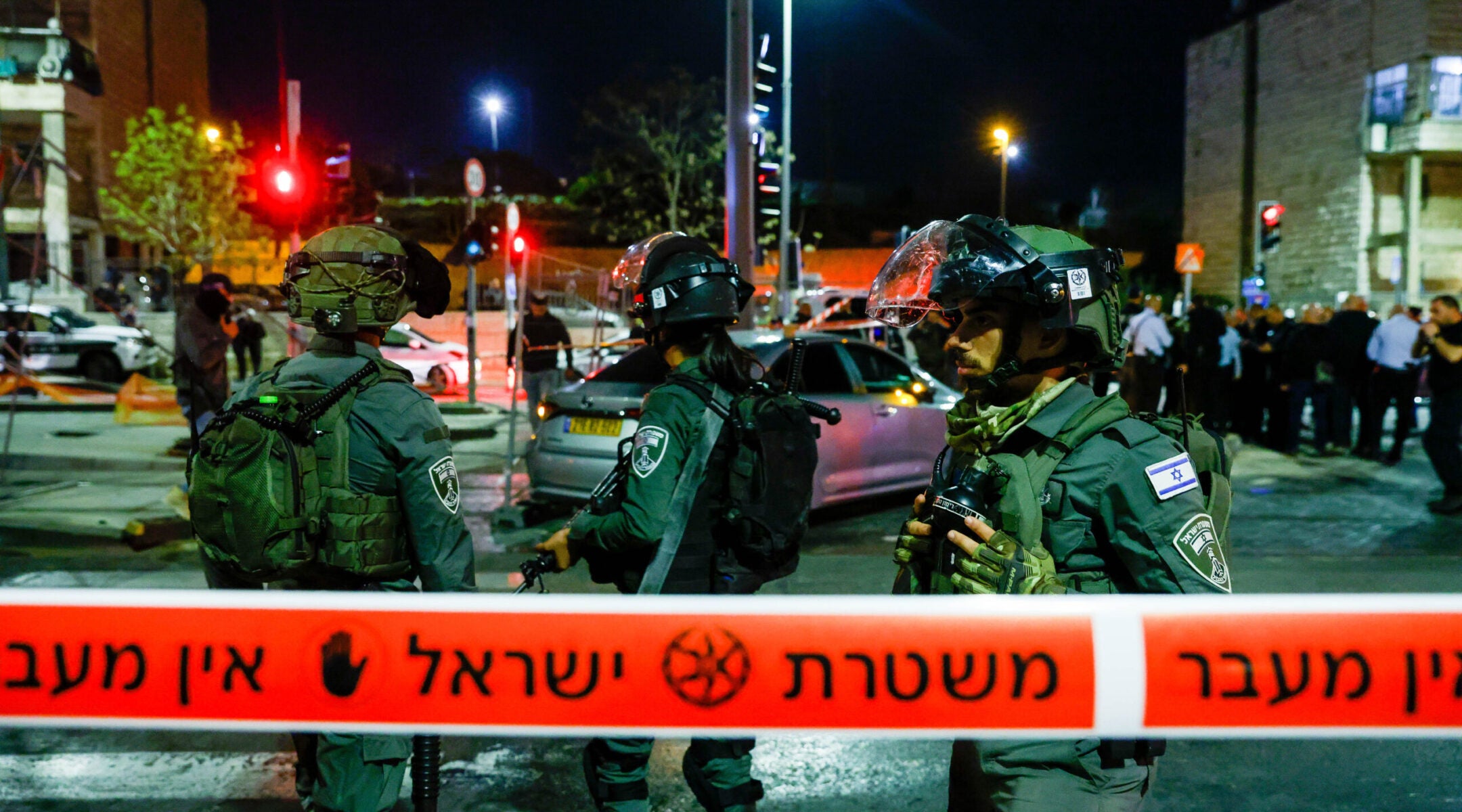
(JTA) — A shooting attack on a synagogue in the Jerusalem neighborhood of Neve Yaakov killed at least seven people on Friday, a day after an Israeli raid on a West Bank city ignited vows of retaliation by Palestinian militant groups.

The attack took place Friday evening as worshipers left Shabbat services. A gunman was killed in a shootout with police, Israeli officials said, identifying him as a resident of eastern Jerusalem who was not Israeli.

No group has claimed responsibility for the attack, but Hamas and Islamic Jihad praised it as retaliation for the raid in Jenin, in which at least nine Palestinians were killed. Israel said the raid was meant to prevent a planned major attack.

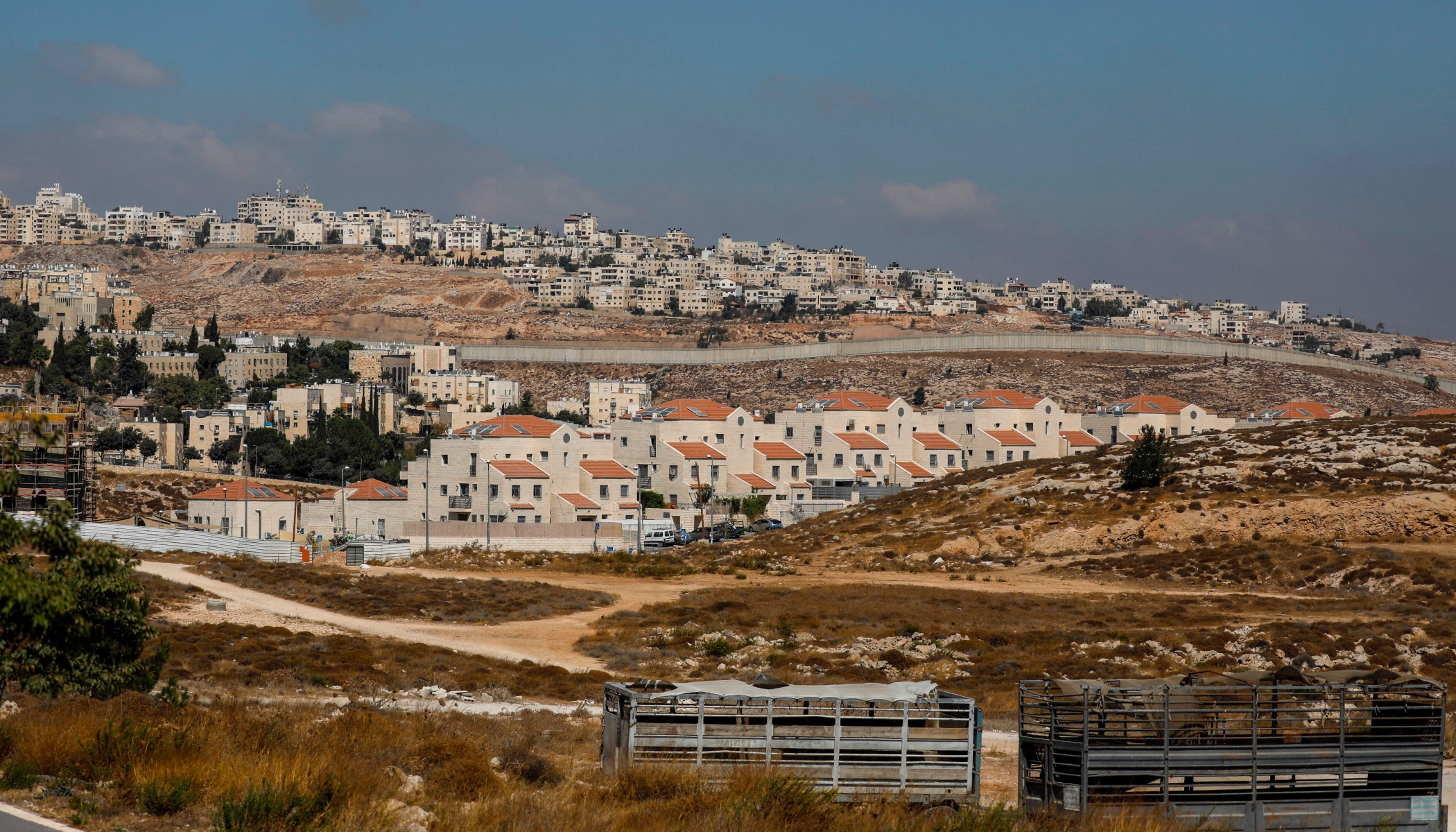
Neve Yaakov is one of the neighborhoods in eastern Jerusalem Israel built after it captured the area in the 1967 Six-Day War. It was constructed to expand the Jewish presence in the city’s eastern portions, although in recent years Palestinian Jerusalemites have rented apartments there. It is near the separation barrier between Jerusalem’s boundaries and the West Bank and near areas under Palestinian Authority control.

Several other people were wounded in the attack, according to the first-responder service Magen David Adom. Among those initially reported as hospitalized were a 70-year-old woman, a 20-year-old man and a 14-year-old boy.

Israel’s concrete barrier separating the Jewish settlement of Neve Yaakov (foreground) in the northern part of east Jerusalem and the Palestinian area of al-Ram (background) in the West Bank, as seen in October 2020. (Ahmad Gharabli/AFP via Getty Images)

The attack comes just days ahead of visits to the region by top U.S. officials, including Secretary of State Antony Blinken and CIA chief Bill Burns. Burns’ trip was hastily planned in response to the raid in Jenin and the vows of retaliation, which threaten to ignite simmering tensions.

The Biden Administration is invested in keeping the Middle East quiet while it focuses its energies on assisting Ukraine in repelling Russia’s yearlong war on the country. The United States and Israeli militaries this week carried out a major joint military exercise widely seen as a signal to Iran, Israel’s deadliest enemy, that any major escalation would be met with massive military force.

This is the first major attack since the new Israeli government led by Prime Minister Benjamin Netanyahu, was sworn in last month. The government includes ministers who want to loosen the rules of engagement for Israeli police and to expand Jewish settlements in Palestinian areas.

One of them, Itamar Ben-Gvir, who oversees internal security, traveled to the scene of the shooting Friday night. In the past, when he was not a government minister, his visits to the scene of terrorist attacks often drew charges that he was seeking to heighten tension to achieve his political goals.

The shooting is the first major one on an Israeli synagogue since 2014, when five people, including four Jews at prayer and a security guard from Israel’s Druze minority, were killed in a synagogue shooting in the western Jerusalem neighborhood of Har Nof.