End of security cooperation with PA could be bad news for Israel

The announcement that came in the wake of a deadly IDF raid in Jenin will force Israel to step up counter-terrorism efforts in the region even further.


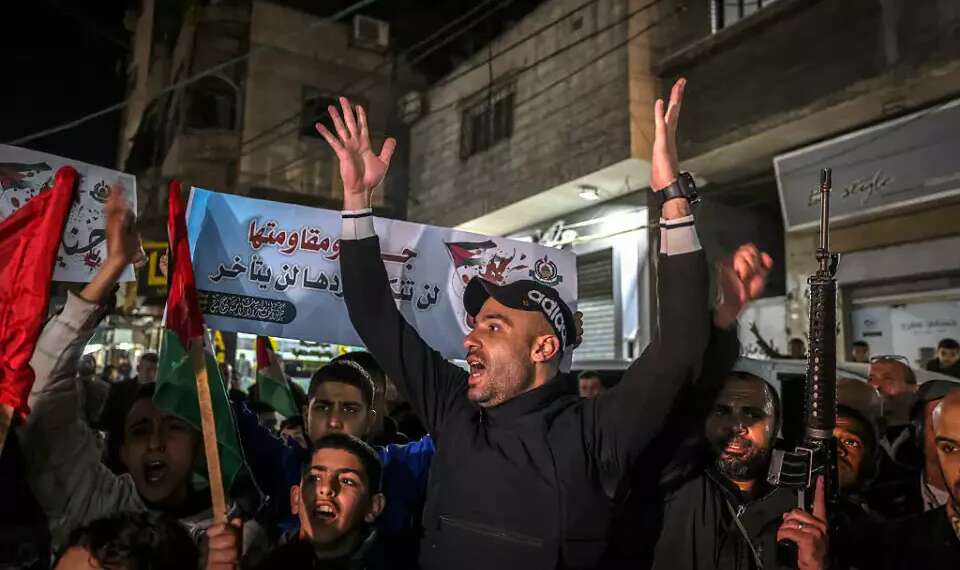
Palestinian Authority President Mahmoud Abbas’ announcement to freeze the security operation with Israel could be bad news as it could lead to an increase in terrorism, forcing the IDF to expand operations in the region further.

Follow Israel Hayom on Facebook, Twitter, and Instagram

On Thursday, another battalion was sent to the sector, joining the Yamam counter-terrorism unit and the Shin Bet security agency in the Jenin refugee camp, in clashes that resulted in the deaths of nine Palestinians, including terrorists.

The IDF said that it was a one-off temporary reinforcement, but if the security coordination does cease, it will be required to increase activity on the ground to make up for activities carried out by the Palestinian security mechanisms – from the arrest of “minor” wanted persons to oversight of various civil events, such as demonstrations that might overflow into clashes with Israeli forces.

Abbas has threatened in the past to sever the security coordination with Israel, but did so only once, after the declaration by then-President Donald Trump of “the deal of the century,” which included US consent to the annexation of part of the West Bank territories by Israel. The change lasted for several months, during which Israel had to increase its activity in Judea and Samaria.

The Palestinians agreed to reinstate the security coordination, among other things, out of fear that Hamas would take advantage of the power vacuum created and strengthen its position in the West Bank. They are likely to do the same this time with the understanding that the coordination serves the security interests of both parties.

Abbas’ move stems from the fact that the PA is under great internal criticism in view of the intense Israeli activity, which has claimed approximately 30 lives since the beginning of the month (and 150 last year). The IDF tries its best to minimize the number of casualties, but they are often required to act aggressively in the face of live fire resistance from terrorists, especially in northern Samaria.

That was the case in Jenin on Thursday. The target was valuable – an armed cell of the Palestinian Islamic Jihad that had already carried out several terror attacks in the area and was planning to carry out more – although the fact that the raid was carried out at daytime when the refugee camp was in full operation, certainly contributed to the intensity of the resistance and the number of casualties.

It is doubtful whether, in the situation that developed in the field, this outcome could have been avoided. The security system should, however, examine in internal investigations that it will carry out whether anything could have been done to minimize the number of casualties, with the understanding that a high casualty rate leads to further unrest in the field and increases the risk of additional attacks and escalation.

The PIJ has already threatened to retaliate for the killings and launched several rockets from the Gaza Strip into Israel early Friday morning. In recent months, the group has been putting a special effort into recruiting activists and carrying out terror attacks, directed and financed by Iran. However, it is now under heavy pressure to respond from both field operatives and the leadership in Damascus.

If the current events lead to an all-out escalation in the South and in Judea and Samaria, the reality on the ground does not bode well. In the past year, there has been a continuous increase in violence in the Palestinian territories, which may worsen in the run-up to Ramadan this coming March. This requires Israel to increase its security-political activities vis-à-vis all the parties in the Palestinian arena – not an easy task considering the composition and plans of the new government.


Russian–Ukraine war escalates threat to Israel’s security

US decision to strip arms stockpiles stored in the Jewish state to resupply Kyiv forces in its deadlocked fight with Moscow is a gamechanger. Why is no one protesting?

For the last 11 months, Israel has sought to signal its opposition to Russia’s illegal invasion of Ukraine while avoiding being dragged into a war that compromises its own security and interests. Threading that needle has been a difficult task, but it was an issue on which both Prime Minister Benjamin Netanyahu and his main political foe–Yesh Atid Party leader Yair Lapid–have been in agreement.

Nevertheless, Israel is now being made to pay a steep price for the war. The news, broken last week by The New York Times, that the US is emptying the strategic reserve of arms and ammunition it has stored in Israel for Middle East emergencies, as well as for the Jewish state to draw on in the event of its being attacked, marks a turning point.

Follow Israel Hayom on Facebook, Twitter, and Instagram

Should a conflict with either Hamas in Gaza or Hezbollah in Lebanon break out at the behest of Iran, or, in a nightmare strategic scenario, with both simultaneously, consequences for the Israel Defense Forces could be serious.

Israel has sent humanitarian aid to Ukraine, including a temporary field hospital on the Polish border when the fighting in that region was at its height. It also has taken in refugees and provided intelligence to the Ukrainians.

But with Russia occupying part of neighboring Syria and granting Israel overflight rights to strike Iranian and other terrorist targets, the Jewish state needs to avoid a conflict with Moscow. Similarly, with Russia’s remaining Jewish population essentially being hostages held by President Vladimir Putin, Israel has every reason to remain neutral.

This hasn’t prevented Ukrainian President Volodymyr Zelenskyy from subjecting Israel to a ferocious campaign of pressure aimed at forcing it to ally itself with Kyiv.

It began with a virtual speech to the Knesset last spring, when Zelenskyy, who is Jewish, engaged in what amounted to Holocaust denial. During his address, he falsely claimed that Ukrainians had stood in solidarity with Jews during the genocide, when, In fact, they were the most enthusiastic of Nazi collaborators.

He has stopped at nothing to leverage sympathy for his country’s plight in order to persuade the Israelis to join the war. Curiously, his attempts have not been accompanied by a willingness to back Israel against the campaign of delegitimization against it in international forums. To the contrary, Ukraine’s anti-Israel votes at the United Nations have coincided with its harsh accusations that Jerusalem isn’t doing enough to defeat Russia.

If that wasn’t bad enough, Zelenskyy then attempted to blackmail Netanyahu into giving him some of his country’s vital air-defense systems, in exchange for Ukraine switching its vote on an antisemitic UN resolution targeting Israel.

Nothing the Ukrainian president actually does outside of his war leadership is given much coverage in the mainstream corporate press. His suppression of political rivals and opposition press outlets–not to mention churches that he has labeled as traitorous for having ties to religious authorities inside Russia–are all ignored. Belief in the myth that he’s the second coming of Winston Churchill and the pristine leader of a Jeffersonian democracy remains widespread.

Sympathy for Ukraine’s suffering people and admiration for its armed forces’ performance in the face of the Russian invasion are nearly universal. So is support for the country’s right to self-determination.

The United States gave Ukraine more than $100 billion in aid to continue the war–a staggering sum that’s likely to increase in 2023. At the same time, both the US and Western Europe are doubling down on their backing by providing heavy weapons like tanks.

These moves come at a time when it’s clear that the Russian invasion has been stymied, and the fighting has become a bloody stalemate that’s starting to resemble trench warfare in World War One. Neither side can win the decisive victory it wants.

Still, President Joe Biden and other allies are backing Zelenskyy’s maximalist war policy. His goal is the eviction of Russian forces from what remains of the territory it overran last winter, most of which has been retaken by Ukraine, as well as the parts of Eastern Ukraine and Crimea that have been in Moscow’s hands since 2014.

No serious person believes such a total Ukrainian victory is possible. By the same token, Putin’s incompetent military–which many in the foreign-policy establishment still foolishly speak of as if it were the powerful Red Army that defeated Hitler and threatened Western Europe during the Cold War–has no prospect of achieving its original aim of conquering all of Ukraine.

While there is much talk about not wanting to grant Putin any legitimacy or a moral victory, those who think sinking more arms and money into this war will lead to his fall are engaging in wishful thinking.

The sensible response to this crisis should be to push for an end to a war that is causing so much suffering and death. But Washington is so besotted with Zelenskyy that it is prepared to risk a confrontation that could lead to a catastrophic World War Three nuclear scenario.

What’s more, Biden is stripping the American military of its supplies of arms and ammunition in order to feed the Ukrainian military’s insatiable demands. That has already left US military forces in a dangerously low state of readiness.

Supporters of unlimited aid to Ukraine say they are sending a message that the West will not tolerate aggression. But the astonishing decision to treat the territorial integrity of Ukraine as the Number One US security priority has had an unintended consequence. It has created a situation in which the West would be unable to come to the aid of Taiwan, should it be invaded by China, the nation that is, contrary to the overblown fears about Russia, by far the most potent threat to American security and global influence.

That’s the context for the decision to empty out the American strategic reserves of arms and ammunition located in Israel. Sacrificing the ability to respond rapidly to a threat to American allies and interests in the Middle East is a steep price to pay to help Ukraine sustain an endless and unwinnable war.

Subscribe to Israel Hayom’s daily newsletter and never miss our top stories!

It’s also one more sign that the Biden administration, like that of former President Barack Obama and in contrast to that of Donald Trump, has downgraded its support for Israel and moderate Arab states in favor of a new strategy that sees them as a burden rather than vital allies.

This move, which makes Israel less secure and may embolden Iran and its terrorist auxiliaries, ought to have generated a firestorm of criticism. But Jerusalem is rightly afraid of pushing back too hard against the pro-Ukraine consensus.

It nevertheless should stick to its refusal to be drawn into a conflict that has unknowable consequences for its security. Biden’s helping to escalate a war that he should be trying to end won’t lead to a Ukrainian victory. What it will do, like his unsuccessful efforts to appease Iran, is make the Middle East an even more dangerous place for Israel and other US allies.

Reprinted with permission from JNS.org.


IAF targets Hamas sites in Gaza in response to rocket fire

Rocket alerts were activated in the Zikim settlement area, Kibbutz Carmia and in the city of Ashkelon.

 A ball of fire and smoke rises during Israeli airstrikes in the Gaza Strip, early on on January 27, 2023 (photo credit: ATTIA MUHAMMED/FLASH90)
A ball of fire and smoke rises during Israeli airstrikes in the Gaza Strip, early on on January 27, 2023
(photo credit: ATTIA MUHAMMED/FLASH90)

The IAF targeted an underground rocket production facility and a “significant” military camp belonging to Hamas in the central and northern Gaza Strip early Friday morning after rockets were fired from Gaza towards southern Israel.

The rocket fire came hours after an IDF raid in Jenin which resulted in nine Palestinian deaths.

The Iron Dome intercepted two rockets fired from Gaza toward Ashkelon and communities near the Gaza border on Thursday evening. During the IAF strikes overnight, additional rockets were fired towards southern Israel. In total, seven rockets were fired from Gaza towards Israel overnight.

“A short time ago an alarm was sounded in the city of Ashkelon. These two launches towards the city were intercepted by the Iron Dome system,” said the Ashkelon Municipality spokesperson. “We would like to add that following the security tensions, the public shelters and shelters throughout the city are open for the welfare of residents… the municipal teams are fully alert and prepared for any scenario.”

“A short time ago an alarm was sounded in the city of Ashkelon. These two launches towards the city were intercepted by the Iron Dome system.”

Ashkelon Municipality spokesperson

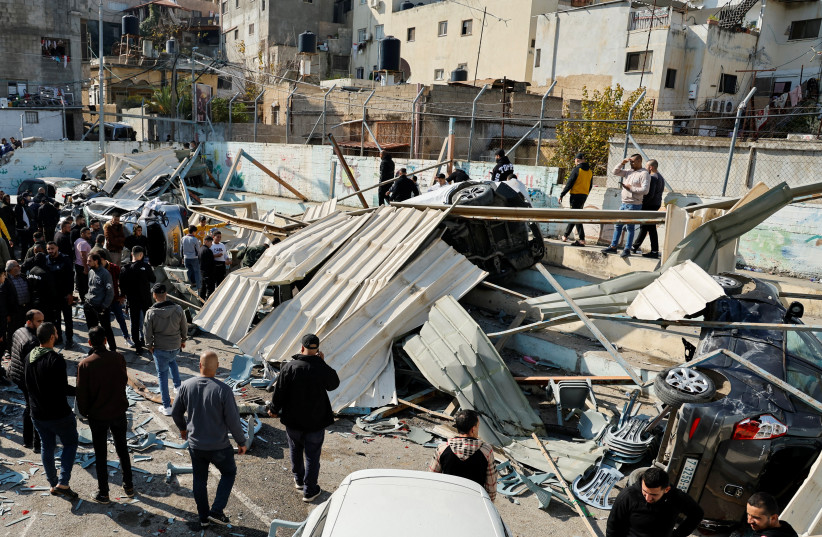
 Palestinians inspect the damage following an Israeli raid in Jenin in the West Bank January 26, 2023.  (credit: REUTERS/RANEEN SAWAFTA)Palestinians inspect the damage following an Israeli raid in Jenin in the West Bank January 26, 2023. (credit: REUTERS/RANEEN SAWAFTA)

Fear of escalation

Defense Minister Yoav Gallant stated on Friday morning that he had instructed the defense establishment to “prepare for action with a variety of offensive measures and high-quality targets, in case it is necessary to continue to act – until peace is restored to the citizens of Israel.”

A senior IDF officer said in a press briefing earlier on Thursday that they were prepared for an escalation of violence in the Gaza Strip in response to Thursday’s raid.

“I expect the response to Hamas to be disproportionate. The dangerous precedent of connecting the events between the West Bank and Gaza is a strategic danger to the State of Israel,” MK Almog Cohen said shortly after the missile strikes from Gaza.

US State Department Spokesperson Ned Price issued a statement regarding the potential escalation of tensions on Friday morning: “We underscore the urgent need for all parties to de-escalate, prevent further loss of civilian life, and work together to improve the security situation in the West Bank.  Palestinians and Israelis equally deserve to live safely and securely.”

“We recognize the very real security challenges facing Israel and the Palestinian Authority, and condemn terrorist groups planning and carrying out attacks against civilians.  We mourn the loss of innocent lives as well as injuries to civilians, and are deeply concerned by the cycle of violence in the West Bank,” Price continued.

UN Special Coordinator for the Middle East Peace Process Tor Wennesland shared the senior IDF officer’s sentiment, saying “I am deeply alarmed and saddened by the continuing cycle of violence in the occupied West Bank. The deaths today of nine Palestinians, including militants and one woman, during an Israeli arrest operation in Jenin is another stark example.”

“Since the beginning of this year, we are continuing to witness high levels of violence and other negative trends that characterized 2022… I urge and remain actively engaged with Israeli and Palestinian authorities to de-escalate tensions, restore calm, and avoid further conflict,” Wennesland declared.

Yonah Jeremy Bob contributed to this report.