
Israel should keep up its Octopus Doctrine against Iran – editorial

Israel should continue to adopt this Octopus Doctrine and work with our friends and partners abroad to raise the alarm about how Iran’s threats to Israel are also threats to the world.
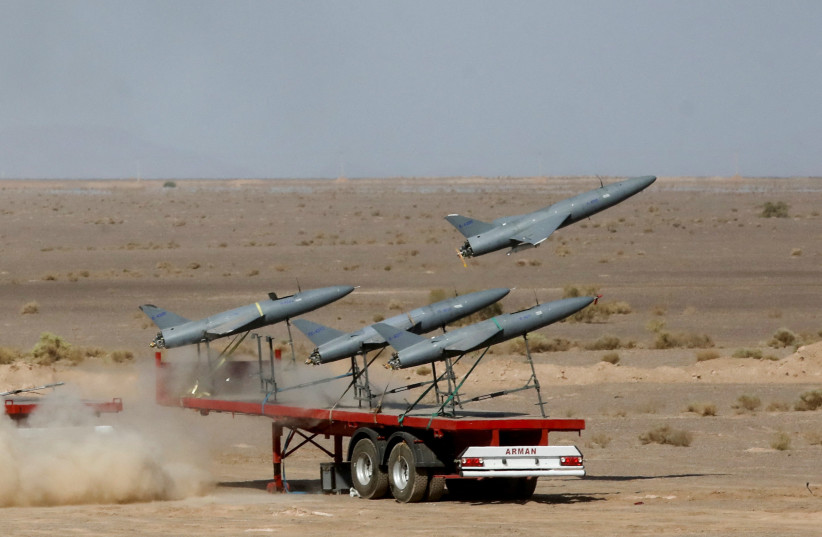
 A drone is launched during a military exercise in an undisclosed location in Iran, in this handout image obtained on August 25, 2022. (photo credit: IRANIAN ARMY/WANA/REUTERS)
A drone is launched during a military exercise in an undisclosed location in Iran, in this handout image obtained on August 25, 2022.
(photo credit: IRANIAN ARMY/WANA/REUTERS)

Talk of an Iran deal continues, but such a deal appears increasingly unlikely, at least in the short term.

At the same time, Mossad Director David Barnea indicated this week that Israel will respond to Iran directly if Iranian-backed groups attack Israel or Israelis.

“The Iranian leadership must understand that attacks against Israel or Israelis, directly or indirectly by proxies, will be met with a painful response against those responsible, on Iranian soil,” Barnea warned during a rare speech at the ICT Herzliya conference.

“The Iranian leadership must understand that attacks against Israel or Israelis, directly or indirectly by proxies, will be met with a painful response against those responsible, on Iranian soil.”

Mossad chief David Barnea

The comments indicate that the Iranian leadership needs to understand its attacks against Israel, or Israelis abroad, will not go unpunished. This doctrine, however, is not new and was actually spelled out by former prime minister Naftali Bennett in June, when he said Israel was “implementing the Octopus Doctrine… We no longer play with the tentacles, with Iran’s proxies. We’ve created a new equation by going for the head.”
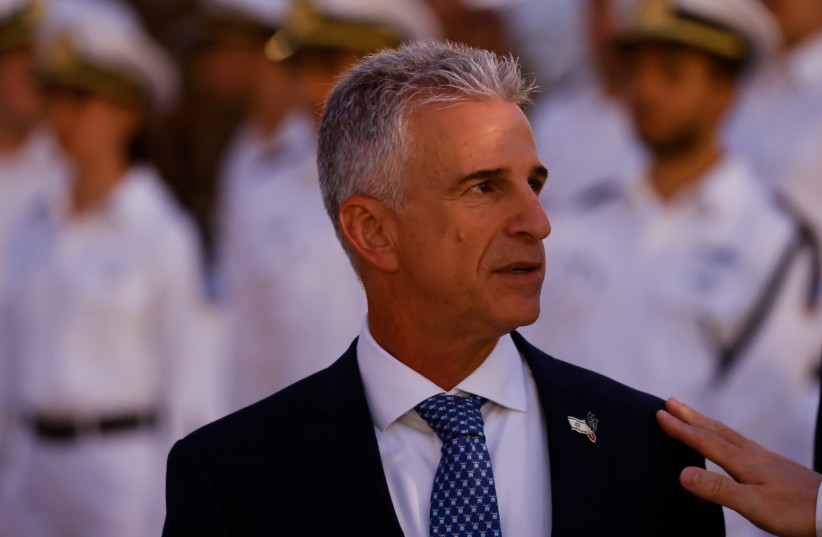
 Mossad chief David Barnea attends a ceremony marking Remembrance Day for Israel's fallen soldiers and victims of terror, at the Western Wall in Jerusalem's Old City, on May 3, 2022. (credit: OLIVIER FITOUSSI/FLASH90)Mossad chief David Barnea attends a ceremony marking Remembrance Day for Israel’s fallen soldiers and victims of terror, at the Western Wall in Jerusalem’s Old City, on May 3, 2022. (credit: OLIVIER FITOUSSI/FLASH90)

Octopus Doctrine against Iran means tensions will increase

Two trends – the decision by Israel to implement an Octopus Doctrine of targeting Iranian planners of attacks, as well as the decision by Iran to continue to ignore its obligations under the 2015 Iran deal – mean that tensions in the region will increase.

We are already seeing the global threat that Iran poses. Iran has shipped drones to Russia, and Ukraine has claimed it shot down one of those drones this week. Iran has also engaged in cyberattacks on Albania. This illustrates how Iran is not only a close ally of Russia, but it is increasing the size of its cyber and drone threats.

In Israel, our view is that Iran must be deterred from a breakout that would lead to a nuclear weapon. At the same time, we want Iran’s proxies to be deterred. The Iranian proxy network has grown in recent years. Hezbollah today possesses a large arsenal of missiles and other weapons, such as drones. Iranian-backed groups in Syria threaten Israel and US forces. Iranian proxies in Iraq and Yemen also threaten Israel and the wider region.

Israel must always be prepared to take matters into its own hands. We have known this since the dawn of modern Zionism. However, the threats are different today than in 1948. Today, we face a complex Iranian adversary. Iran does not possess a large conventional army. We don’t need to send the Armored Corps to do tank battles like in 1967. On the other hand, Iran is not similar to a Palestinian terrorist group. We cannot use counterinsurgency methods against Hezbollah or Iranian entrenchment in Syria.

Israel has resorted to what is called the Campaign Between the Wars for the last decade to contend with Iran’s growing role in Syria. Recent airstrikes on airports in Damascus and Aleppo, which the Syrian regime blamed on Israel, illustrate a sense that Iran is continuing to traffic weapons via key Syrian airports.

The Octopus Doctrine potentially gives Israel a way out of the Whac-A-Mole strategy in Syria. Iranian members of the Islamic Revolutionary Guard Corps and other forces must know they cannot continue to attack Israel or plot against Israelis abroad. Iran has tried to cook up numerous plots, especially in Turkey, in recent years. Thwarting those plots is important, but Iran also has to pay a price.

Israel should continue to adopt this Octopus Doctrine and work with our friends and partners abroad to raise the alarm about how Iran’s threats to Israel are also threats to the wider region and the world.

How does Iran threaten the world?

Iranian drones were used against Israel, but now they are making their way to Venezuela, Ethiopia and Russia. Iran’s cyberattacks targeted Israel, but now they target members of NATO. Iran’s assassins are threatening dissidents across Europe. Iran has attacked commercial ships in the Gulf of Oman.

For too long the Tehran regime has had a kind of impunity. Some of this impunity is due to its ability to hold up a possible deal over its nuclear program as a kind of blackmail. Iran asserts that if anyone confronts Tehran, then the likelihood of a deal will be reduced.

However, it now appears Iran has soured on the deal anyway and is trying to wring more concessions. This should illustrate that Iran is not a trustworthy country to be negotiated with.

Israel’s apparent policy of targeting Iran’s proxies and allies that are doing its bidding against the Jewish state is a sound one that is helping to keep the threat from Tehran at arm’s length.


After Hezbollah, Hamas Demanding Rights to Offshore Gas Fields

The Gaza Strip-based Hamas terror organization is demanding rights to gas fields situated off Israel’s shores, following the Lebanese Hezbollah terror organization that is threatening to attack Israel over the same issue.

The common Israel-Lebanon maritime boundary is not agreed upon between the two countries. The issue has been under discussion for over a decade. The focus of both sides is the oil and gas discoveries in the territorial waters which are under dispute.

In recent months, the two countries held talks, mediated by the US and hosted by the Office of the United Nations Special Coordinator for Lebanon (UNSCOL) at Rosh Hanikra. Amos Hochstein, the Biden administration’s Special Envoy for International Energy, is currently serving as mediator. He has traveled between Jerusalem and Beirut in recent weeks, and while expressing optimism, has not yet brought any final resolution.

Hezbollah’s Secretary-General Hassan Nasrallah has threatened to attack Israel several times in recent weeks. Reports say that Israel has made concessions to Lebanon, possibly to prevent a conflict. On Sunday, the Al-Arabiya network reported that an agreement between Israel and Lebanon is almost complete and that the Karish field will remain in Israeli hands, while the nearby Kana field will be fully in Lebanese territory, an Israeli concession.

Following these reports, Hamas is demanding “rights to Palestine’s natural resources.”

Sohail Al-Hindi, a member of Hamas’ political bureau, stated Tuesday that the terror organization “will defend our right to natural gas with blood and weapons.”

The terrorist organizations in the Gaza Strip are preparing for protests at sea to put pressure on Israel to lift the military blockade on the Strip and get their right to extract natural gas from the gas reserves of the Gaza Strip coast.

Hamas said in a statement on Tuesday that “our Palestinian people and their valiant resistance will not allow the Zionist occupation to steal and plunder the wealth of our people.”

Hamas spokesman Hazem Qassem said that “our people have the right to live in freedom and dignity and to benefit from their natural wealth,” stressing that “there is no compromise on the rights, principles and natural resources of our people.”

He called on the Palestinian Authority to “carry out its duties and responsibilities to stop the Zionist occupation’s plundering of our people’s natural resources.”


Iran and Russia furious with Europe over nuclear talks

Iran slammed a joint statement by France, Germany and Britain criticizing Iran’s conduct in the ongoing nuclear talks.

 Russian Foreign Minister Sergei Lavrov shakes hands with Iranian Foreign Minister Hossein Amir-Abdollahian during a joint news conference in Moscow, Russia August 31, 2022. (photo credit: REUTERS/MAXIM SHEMETOV/POOL)
Russian Foreign Minister Sergei Lavrov shakes hands with Iranian Foreign Minister Hossein Amir-Abdollahian during a joint news conference in Moscow, Russia August 31, 2022.
(photo credit: REUTERS/MAXIM SHEMETOV/POOL)

Iran expressed resentment over a joint statement by France, Germany and Britain on Saturday night criticizing Iran’s conduct within the framework of the ongoing nuclear negotiations. Iranian officials were outraged by the wording of the statement, which said that “unfortunately, Iran has chosen not to take advantage of this critical diplomatic opportunity, and instead, it continues to escalate its nuclear program far beyond any justification.”

Iranian Foreign Ministry spokesman Nasser Kanani said that the statement was “not constructive,” and called on the three signator countries “to be more active in finding solutions to the few differences of opinion that remain.”

Kanani expressed regret that the European powers “are taking a step in the direction of Israel, which wants the nuclear talks to fail. Their joint statement was made in an ill-considered manner, and the responsibility for the consequences, if any, rests with them.”

Russia’s response to the joint statement

Dimitri Ulyanov, Russia‘s representative for the Iran nuclear negotiations, also criticized the wording of the joint statement, claiming that it was “very hasty.” He added that “the current barrier in the talks does not constitute a serious obstacle in the negotiations.”

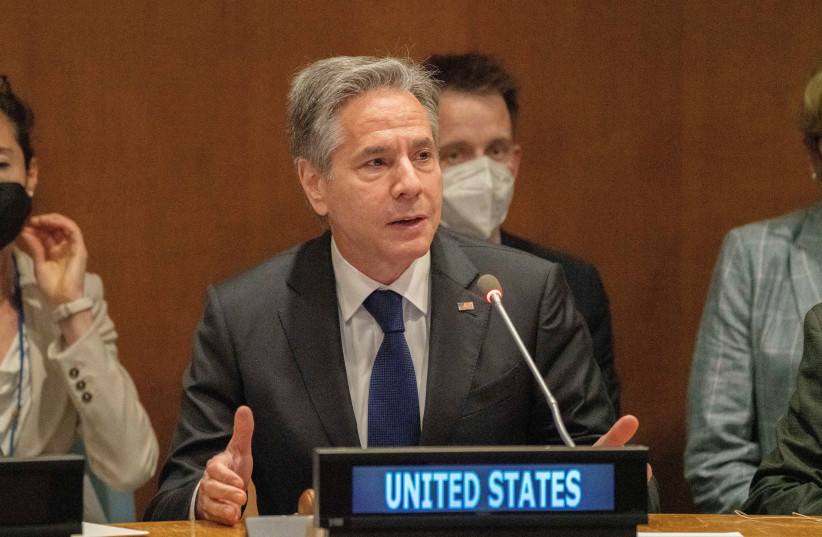
 US Secretary of State Antony Blinken speaks at a sideline meeting of the Nuclear Non-Proliferation Treaty review conference in New York City, New York, US, August 1, 2022. (credit: REUTERS/DAVID 'DEE' DELGADO)US Secretary of State Antony Blinken speaks at a sideline meeting of the Nuclear Non-Proliferation Treaty review conference in New York City, New York, US, August 1, 2022. (credit: REUTERS/DAVID ‘DEE’ DELGADO)

“If we reach the agreement, it will only be to advance our national security.”

Secretary of State Antony Blinken

On the American side, they reacted with restraint following the recent developments, and Secretary of State Antony Blinken announced that even though several gaps between the parties have been closed in recent weeks, Iran’s conduct constitutes a setback in the negotiations “when it continues to make demands outside the agreement.” Despite this, he added that “if we reach the agreement, it will only be to advance our national security.”

In the meantime, the US Treasury announced the imposition of new sanctions against Tehran, including various sanctions against the Iranian intelligence ministry—a move that also drew condemnation from Iranians.
