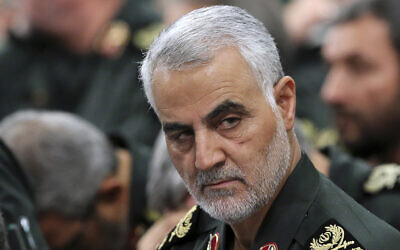
Bahrain targeted by Iranian-backed ‘terror attack’

Media reports indicated the plot was designed to avenge the killing of IRGC commander Qasem Soleimani.
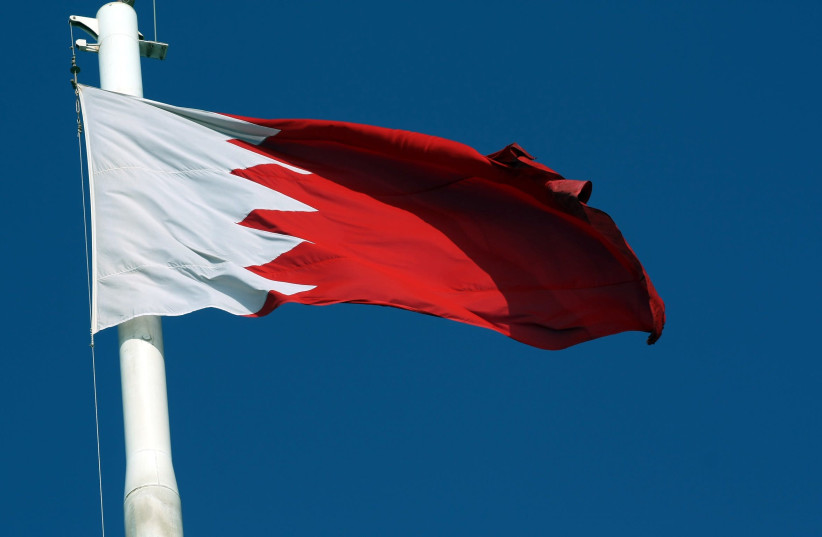
Bahrain’s Interior Ministry said it was targeted by an Iranian-backed terror plot, according to local media reports. “The Ministry of Interior managed to thwart a huge terrorist plot in the Kingdom of Bahrain that received support and funding from Iran and members of the terrorist Revolutionary Guard Corps,” a statement at Akhbar Al-Khaleej media in Bahrain stated Sunday.

Media reports indicated the plot was designed to avenge the killing of IRGC commander Qasem Soleimani. The US 5th Fleet has a base in Bahrain and Iran has vowed harsh revenge for the US killing of Soleimani in January. The plot comes less than a week after the ceremony in Washington marking the Abraham Accords in which Bahrain vowed to normalize ties with Israel.

The plot was designed to target public and security facilities in the Kingdom. Bahrain is a relatively small country with a large Shi’ite population. It has faced unrest in the past and Iranian media has increased incitement against Bahrain since the country hosted part of the US “deal of the century” economic plan summit in 2019.

Iranian media has been bashing Bahrain since the White House announced that Bahrain would normalize ties with Israel. Iran has accused the Gulf states of betrayal and media in Iran, such as Fars News and Tasnim News, had highlighted protests in Bahrain and the UAE against the agreements.

The news, including at Al-Ain media and other sources, on Sunday evening in the Gulf says that the recent plot was uncovered and included an explosive device put on a street in the “Budaiya area” of the country. Terror organization members were going to manufacture explosives, received foreign currency, and had “books related to terror ideology.” A criminal indictment against 18 defendants has been filed. Nine of them are apparently fugitives in Iran. Al-Ain media shows photos of the alleged cars and sites of one of the incidents linked to the attack and plot.

The report notes that the members of the group were linked to Saraya al-Ashtar and the “Al-Wafa movement.” They had received direct support from the IRGC and around 14 of the terrorists underwent training, apparently in foreign camps. They were monitored. They returned to Bahrain and conducted surveillance on foreign and national security installations. They photographed workers at these sites and also looked at oil depots and economic points that could be struck. They received explosives.

“One of the defendants admitted to receiving military training at Hezbollah camps in Iraq.” He was found with weapons in a region whose name was given as Saar. He received money in drop boxes or via “dead letter” deliveries. This appears to be a complex plot using tradecraft associated with spies and intelligence networks and the plot apparently goes back to 2019 with roots back in 2018 and 2017.

At some point the plotters stole a car to carry out their operations. They targeted a sports event but cancelled the operation due to a malfunction in an explosive device. They also sought to target the international exhibition center but made a mistake with the explosives. This then led to the placing of the bomb on a street in the Budaiya region to strike at a “foreign delegation.” Security forces sought out the perpetrators. It appears that they had monitored US forces in the region of Manama as well. “Another admitted to participating in an attempt to blow up he oil pipeline in the Hamala region.” This other terrorist also targeted a police patrol.

Bahrain has said it seized explosive material and even “projectiles” which seems to indicate other munitions. The revelation of the plot appears to indicate a complex group that attempted to find numerous targets to undermine Bahrain. It is unclear when they were ordered by Iran to carry out their deeds or if they decided on their own. Other Iranian proxies, such as the Houthis in Yemen, have increased attacks on neighboring Saudi Arabia. The Houthis have also targeted the UAE. Iranian-backed groups such as Kataib Hezbollah have also threatened US forces in Iraq. In recent weeks the Abraham Accords led to concerns that Iran could target Bahrain as it targeted Saudi Arabia last September with drones and cruise missiles. Houthi plots against Bahrain were also alleged, but the Houthis are too far away to strike directly.

A length article at Al-Ain provides images apparently from Bahrain’s security forces that illustrate the cars and other sites linked to the plot. In April 2019 Bahrain sentenced 139 to prison in a mass terror trial. The country also revoked the citizenship of 115 people on terror charges in 2018. Bahrain has also executed people on terror charges and carried out numerous trials in the last years. The kingdom generally accuses members of the Shi’ite community of working with Iran or engaging in anti-state activities as part of these trials. Human rights groups have expressed concern.

Bahrain considers Hezbollah in Lebanon a terrorist group and also labels Saraya al-Ashtar, Saraya Al Muqawama and the February 14 Coalition as terrorists. Ashtar is a militant group that uses the IRGC and Hezbollah logo and is linked to Iran. Wafa is a group that also was reported to have turned to “armed struggle” against Bahrain. In 2011 a series of protests in the Kingdom linked to the Arab Spring resulted in intervention by Saudi Arabia and the Gulf Cooperation Council. Since then protest and dissent have been kept closely controlled. While speculation online linked the plot to the recent announcement of ties to Israel, such a sophisticated plot would not likely be put in place in a week. Whether Tehran might have tried to operationalize elements of it, using sleeper cells, in such a short time is less clear.


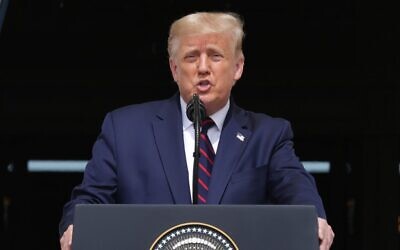
Russian media: Is Russia opposed to the Israel-Bahrain-UAE deal

Netanyahu and Putin have had warm relations for many years and Israel and Russia frequently have discussed Syria over the years.

Russian President Vladimir Putin talks with Palestinian President Mahmud Abbas in the West Bank town of Bethlehem January 23, 2020 (photo credit: ALEXANDER NEMENOV/POOL VIA REUTERS)
Russian President Vladimir Putin talks with Palestinian President Mahmud Abbas in the West Bank town of Bethlehem January 23, 2020
(photo credit: ALEXANDER NEMENOV/POOL VIA REUTERS)
After the UAE-Israel deal was announced in August the Russian perspective was largely ignored in most western media. However, Russia has expressed differing views on the deal as it matured and came to include Bahrain.

Russia appears to both embrace it and have skepticism about it. But the official views on the surface may be only part off the story. The deals are an American affair and could be s setback for Russia’s increasing role in the region.

An article at the Middle East Institute in August basically asserted that Moscow is of two minds on the issue. Now a new report at Tass news provides more insight into Russia’s views.

In late August, Russian President Vladimir Putin and Israeli Prime Minister Benjamin Netanyahu spoke by phone and discussed the UAE deal. At the time Bahrain was not yet in the news.

Netanyahu and Putin have had warm relations for many years and Israel and Russia frequently have discussed Syria over the years.

This has meant a reduction in tensions. However, Russia has expressed the traditional view in the last week that peace is not possible in the region without an Israeli-Palestinian deal.

Russia should know since its Cold War policies helped arm states that were hostile to Israel and Palestinian groups, including terrorists, looked to eastern bloc states for support or at least transit and shelter.

Thus Moscow helped fuel the paradigm that sees the Palestinian conflict as a center of the Middle East. Yet Moscow also plays a limited role in solving this conflict and has been more pragmatic than US policymakers who have sometimes bordered on naivety when looking at chances for peace.

Foremost for Moscow is the importance of stability in the region and not having ungoverned spaces that breed extremism. Moscow is willing to work with authoritarian regimes and doesn’t care about the US former policies of democracy promotion in the Middle east or humanitarian intervention.

Given this history and complexity of Russian policy it is important to recall that Lavrov met Hamas leader Ismail Haniyah earlier this year and the leader of Palestinian Islamic Jihad.

Israel complained about these March meetings. Russia has generally said it could play a larger role in hosting Israeli and Palestinian leaders.

The new report at Tass news over the weekend, is presented as a press review of Russian media. Tass is an official Russian outlet.

The review notes that Palestinian Authority Ambassador to Moscow Abdel Hafiz Nofal told Russia’s Izvestia said that the Palestinians support the 2002 Arab Peace Initiative hat envisions Israel leaving all “territories occupied in 1967.”

Tass then noted that “Oman could be the next one to recognize the Jewish state,” a statement it attributes to Israeli officials. The newspaper indicated Israel had not fully given up annexation plans for the Jordan valley.

Tass also notes that the Chairman of the Federation Council Foreign Affairs Committee Konstantin Kosachev “believes that the normalization of ties between the UAE, Bahrain and Israel is unlikely to bolster the peace process in the Middle East, stressing that on the contrary, the escalation is going to mount.”

Furthermore a Senior Fellow of the Center for Arab and Islamic Studies at the Institute of Oriental Studies in the Russian Academy of Sciences named Boris Dolgov, has said that the “Bahraini and Emirati recognition of Israel did not come as a surprise. Both countries are known for their pro-US position: Bahrain hosts the Fifth Fleet of the US Navy and the US air force’s Al Dhafra air base is located in the UAE.

This step won’t drastically change the situation in the Middle East, but it will split the Arab and Muslim world,” Tass news reported that the expert explained.


Citing US intel reports, NY Times says Khamenei fears direct confrontation will help president’s campaign and believes Natanz attack was intended to provoke a clash


Iranian Supreme Leader Ayatollah Ali Khamenei addresses the nation in a televised speech marking the anniversary of the 1989 death of Ayatollah Ruhollah Khomeini, the leader of the 1979 Islamic Revolution, in Tehran, Iran, June 3, 2020. (Office of the Iranian Supreme Leader via AP)

Iranian Supreme Leader Ayatollah Ali Khamenei addresses the nation in a televised speech marking the anniversary of the 1989 death of Ayatollah Ruhollah Khomeini, the leader of the 1979 Islamic Revolution, in Tehran, Iran, June 3, 2020. (Office of the Iranian Supreme Leader via AP)

American intelligence reports indicate Iran has avoided strong military action against the US — despite an intense pressure campaign by Washington that has included tightening sanctions and rumored attacks on its installations — because it believes restraint will help prevent President Donald Trump’s reelection in November, according to a New York Times report.

The newspaper cited several American officials and US allies who were briefed on the intel reports. It said Iranian Supreme Leader Ali Khamenei is hoping for a less antagonistic US administration come January, but believes a significant conflict between the countries will bolster Trump’s odds of holding on to the presidency.

The report said the Iranians believe a July explosion that damaged one of its nuclear sites in Natanz, and which foreign media reports have attributed to Israel or the US, was intended to provoke a response that would justify military strikes on the Islamic Republic.

It also said that while Khamenei has forbidden serious military action, he has allowed extensive cyber activity and hacking attempts against US targets. Last week Microsoft said Iranian hackers have engaged in attacks on personal accounts of those associated with Trump and his campaign, in an effort to influence the 2020 election, though it said its security tools stopped most of the attempts.

US President Donald Trump speaks at the signing ceremony of the Abraham Accords on the South Lawn of the White House September 15, 2020 in Washington, DC. (Alex Wong/Getty Images/AFP)

On Saturday Iran’s Revolutionary Guards chief said Tehran will avenge the US killing of its top commander General Qassem Soleimani in January by targeting only those involved, in an “honorable” retaliation.

The guard’s website quoted Gen. Hossein Salami as saying, “Mr. Trump! Our revenge for martyrdom of our great general is obvious, serious and real.”

Trump warned this week that Washington would harshly respond to any Iranian attempts to take revenge for the death of Soleimani, tweeting that “if they hit us in any way, any form, written instructions already done we’re going to hit them 1000 times harder.”

The president’s warning came in response to a report that Iran was plotting to assassinate the US ambassador to South Africa in retaliation for Soleimani’s killing at Baghdad’s airport at the beginning of the year.

Salami rejected the report of an Iranian plot to assassinate Ambassador Lana Marks, but made clear that Iran intends to avenge the general’s death.

“Do you think we hit a female ambassador in return to our martyred brother?” the general said. “We will hit those who had direct and indirect roles. You should know that everybody who had a role in the event will be hit, and this is a serious message. We do prove everything in practice.”

Senior Revolutionary Guard commander General Qassem Soleimani attends a meeting with Supreme Leader Ayatollah Ali Khamenei (not seen) and Revolutionary Guard commanders in Tehran, Iran, September 18, 2016. (Office of the Iranian Supreme Leader via AP)

In January, Iran launched a ballistic missile attack targeting US soldiers in Iraq in response to the fatal drone strike.

Trump has stepped up economic pressure on Iran with sanctions since he pulled the United States out of Iran’s nuclear deal with world powers in 2018.

Tehran has continued to expand its stockpile of enriched uranium and pressured other nations to offset the harm of US sanctions, while insisting it does not want to develop a nuclear weapon.

On Saturday night the United States unilaterally proclaimed that UN sanctions against Iran were back in force and promised to punish those who violate them. However Washington is almost alone on the issue: all the other great powers — China, Russia and also the US’s own European allies — have challenged the claim.

https://www.timesofisrael.com/iran-said-refraining-from-attack-on-us-fearing-it-could-help-trumps-reelection/#gs.gmozuk