
Via US-led truce mechanism, Jerusalem reportedly threatens to continue stepped-up strikes, saying terror group has smuggled hundreds of rockets and recruited thousands of members
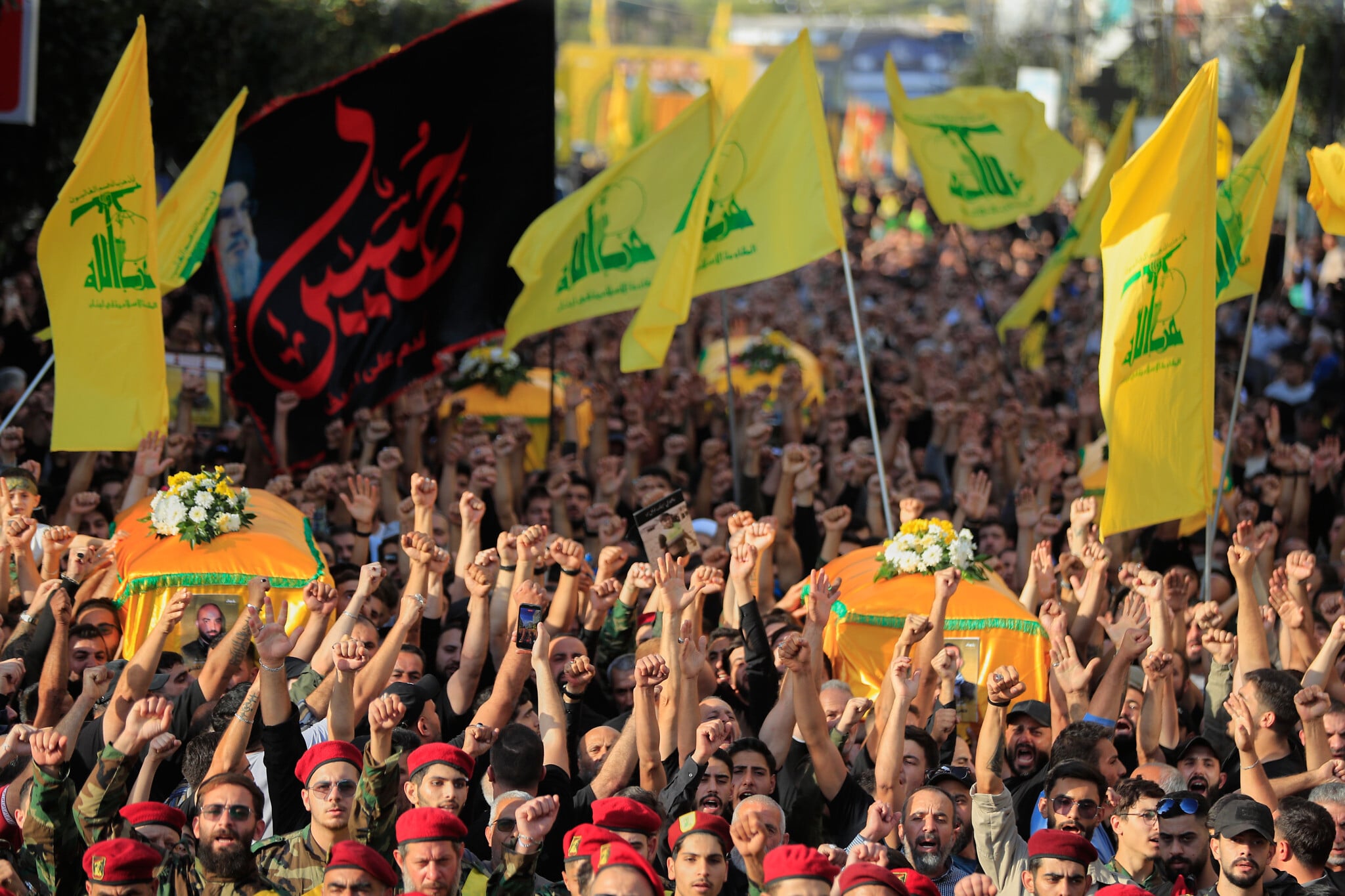
Hezbollah fighters and supporters raise their fists and chant slogans as they march in the funeral procession of five comrades killed in Israeli strikes in recent days, in the southern town of Nabatieh, Lebanon, November 2, 2025. (AP Photo/Mohammad Zaatari)

Hezbollah fighters and supporters raise their fists and chant slogans as they march in the funeral procession of five comrades killed in Israeli strikes in recent days, in the southern town of Nabatieh, Lebanon, November 2, 2025. (AP Photo/Mohammad Zaatari)

Israel has warned Lebanon’s army that it is not satisfied with the actions taken so far against the Hezbollah terror group, vowing to continue its stepped-up bombing campaign unless the situation changes, a report said Saturday.

In a message relayed recently via the US-led mechanism to enforce the ceasefire between the countries, Jerusalem said Beirut hasn’t sufficiently been working to disarm Hezbollah, listing several steps the Iran-backed terror group has been taking, undisturbed, to rebuild its force, according to the Kan public broadcaster.

The unsourced report said Israel cautioned that Hezbollah is working to replenish its arsenal, in violation of the ceasefire reached last year, which required it to disarm.

The report said that in recent weeks, Hezbollah has smuggled hundreds of rockets from Syria into Lebanon, restored missile launchers damaged in the fighting with Israel, and enlisted thousands of new recruits.

“You aren’t doing enough against Hezbollah, not in pace and not in scale,” the broadcaster quoted the Israeli message to Lebanon as saying. “Without significant action in rural areas and private property, Israel will continue to forcefully attack.”

Since the ceasefire was reached in November 2024, Israel has carried out many strikes on Hezbollah targets it says posed an immediate threat, which the truce terms allow it to act against.

The Israel Defense Forces has recently stepped up these strikes, killing three Hezbollah members in two separate strikes on Saturday, after an intense bombing campaign on Thursday.

The European Union condemned the strikes and asked Israel to respect the ceasefire.

“The EU calls on Israel to cease all actions that violate resolution 1701 and the ceasefire agreement reached a year ago in November 2024,” the EU’s foreign affairs spokesman Anouar El Anouni stated.

“At the same time, we urge all Lebanese actors and especially Hezbollah to refrain from any measures or responses that could further inflame the situation,” he added.

“Focus by all parties must be on preserving the ceasefire and the progress achieved so far.”
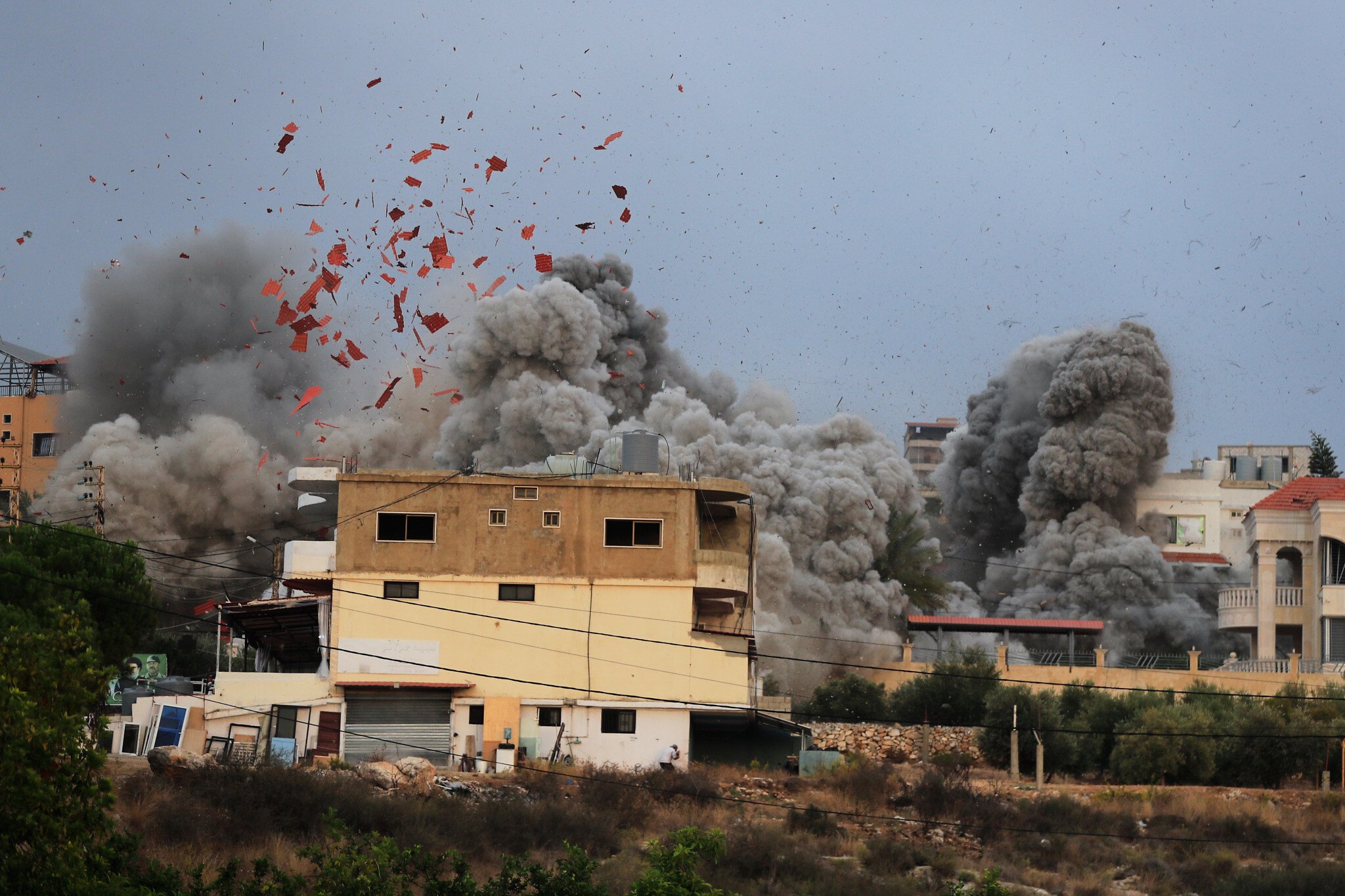
Smoke rises following an Israeli airstrike in the village of Tayr Debba, southern Lebanon, November 6, 2025. (AP Photo/Mohammad Zaatari)

Israel’s war with Hezbollah began on October 8, 2023, when the terror group began firing missiles at the Jewish state a day after the Hamas-led onslaught in the south. Israel launched massive airstrikes and a limited ground incursion in September 2024, killing much of the terror group’s leadership and destroying much of its fortifications along the border. A ceasefire was declared two months later, with Hezbollah left severely weakened.

Since then, the Lebanese army has drawn up a plan to disarm the terror group and has reportedly expended so much ordnance to blow up Hezbollah stockpiles that it has faced shortages of explosives. Hezbollah has vowed not to lay down its arms.

The Lebanese army has accused Israel of seeking to “undermine Lebanon’s stability” with the frequent strikes and to “prevent the completion of the army’s deployment” in line with the ceasefire.

Lebanon and Israel are still technically in a state of war, but all the recent armed conflicts with Israel were fought by Hezbollah, not the Lebanese military.

Hezbollah was the only movement in Lebanon that refused to disarm after the 1975-1990 civil war.

Emanuel Fabian and agencies contributed to this report.

According to the source, Riyadh anticipates a return to the type of indirect communication with Israel that was facilitated by the US prior to the October 7 massacre.

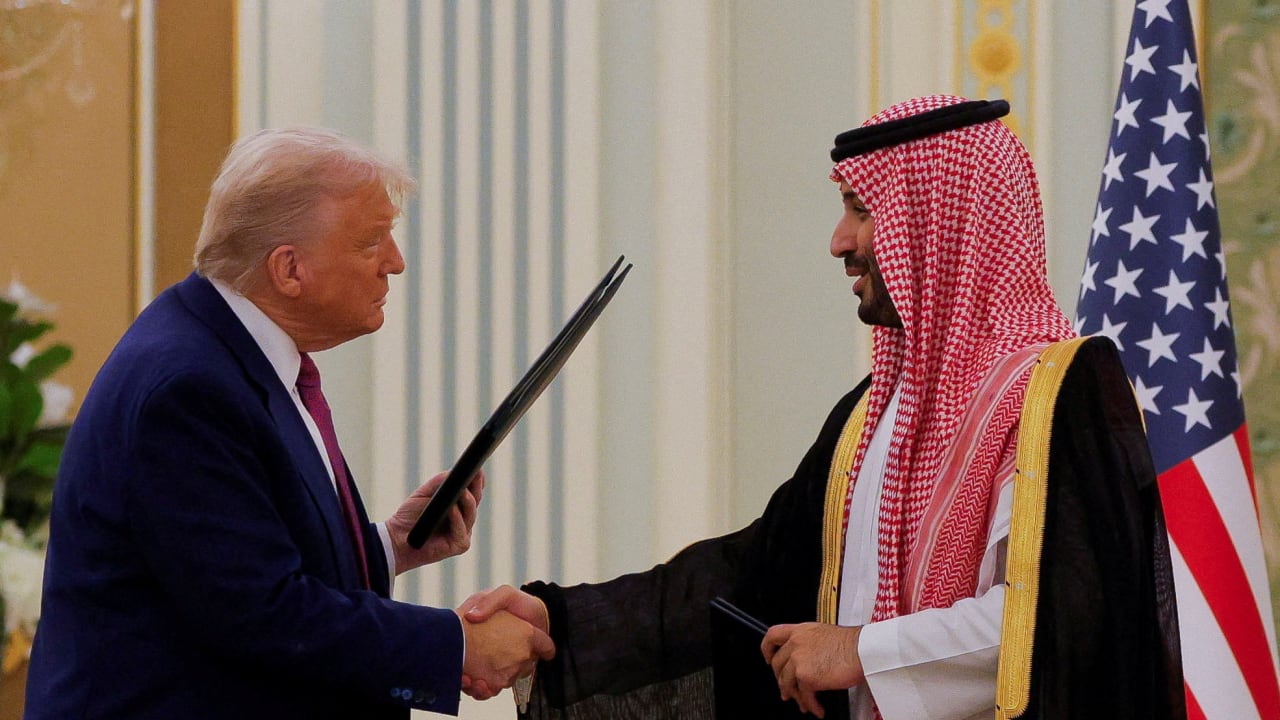
 US President Donald Trump and Saudi Crown Prince and Prime Minister Mohammed Bin Salman shake hands during a Memorandum of Understanding (MOU) signing ceremony at the Royal Court in Riyadh, Saudi Arabia, May 13, 2025.
US President Donald Trump and Saudi Crown Prince and Prime Minister Mohammed Bin Salman shake hands during a Memorandum of Understanding (MOU) signing ceremony at the Royal Court in Riyadh, Saudi Arabia, May 13, 2025.
(photo credit: REUTERS/BRIAN SNYDER)
While normalization between Saudi Arabia and Israel is not yet imminent, efforts to lay the groundwork are underway, a source within the Saudi royal family told Kan News on Saturday.

The comment came as Saudi Crown Prince Mohammed bin Salman is expected to visit Washington in 10 days for a meeting with US President Donald Trump.

According to the source, Riyadh anticipates a return to the type of indirect communication with Israel that was facilitated by the US prior to the October 7 massacre.

US PRESIDENT Donald Trump and Saudi Crown Prince Mohammed bin Salman Al Saud attend the Saudi-US Investment Forum in Riyadh in May. The deeper the Saudi-American partnership becomes, the less incentive Riyadh will have to normalize ties with Israel, the writer asserts. (credit: BRIAN SNYDER/REUTERS)

Thawing the ice between Israel and Saudi Arabia 

Kan reported that the talks would aim to “thaw the ice” between the two countries and help bridge positions that had grown more distant during the war.

Saudi sources stressed that normalization with Israel will not move forward without a two-state agreement between Israel and the Palestinians.

Saudi officials viewed Kazakhstan’s recent decision to join the Abraham Accords as a positive development, Kan also reported.

Kazakhstan officially joined the Abraham Accords on Thursday following a trilateral phone call between US President Donald Trump, Prime Minister Benjamin Netanyahu, and Kazakh President Kassym-Jomart Tokayev, Trump confirmed.

Kazakhstan’s signature of the accords will be the “first of many” of Trump’s second term, Trump said.

“This is a major step forward in building bridges across the World. Today, more Nations are lining up to embrace Peace and Prosperity through my Abraham Accords.”


US to start UN negotiations on international Gaza force mandate

The US formally circulated the draft resolution to the 15 council members late on Wednesday and has said it has regional support from Egypt, Qatar, Saudi Arabia, Turkey, and the UAE.

View of destroyed buildings following an Israeli military operation in Gaza City, October 25, 2025
(photo credit: Ali Hassan/Flash90)
The United Nations Security Council started negotiations on a US-drafted resolution to endorse President Donald Trump’s Gaza peace plan, and authorize a two-year mandate for a transitional governance body and international stabilization force on Thursday, a senior US government official said.

The US formally circulated the draft resolution to the 15 council members late on Wednesday and has said it has regional support from Egypt, Qatar, Saudi Arabia, Turkey, and the United Arab Emirates for the text.

“The message is: if the region is with one on this and the region is with one on how this resolution is constructed, then we believe that the council should be as well,” the senior US government official, speaking on condition of anonymity, told Reuters.

“Russia and China will certainly have their inputs, and we’ll take those as they come. But at the end of the day, I do not see those countries standing in the way and blocking what is probably the most promising plan for peace in a generation,” the official said.

Members of the United Nations Security Council vote on a resolution by Russia and China to delay by six months the reimposition of sanctions on Iran during the 80th UN General Assembly in New York City, US, September 26, 2025. (credit: REUTERS/EDUARDO MUNOZ)

Trump told reporters later on Thursday that the international force would deploy “very soon.” US Secretary of State Marco Rubio then noted that the countries volunteering to contribute troops “need this UN mandate in order to be able to do it.”

Hamas

The draft resolution, seen by Reuters, would authorize a Board of Peace transitional governance administration to establish a temporary International Stabilization Force in Gaza that could “use all necessary measures,” language for force, to carry out its mandate.

The ISF would be authorized to protect civilians and humanitarian aid operations, work to secure border areas with Israel, Egypt and a “newly trained and vetted Palestinian police force.”

The ISF would stabilize security in Gaza by “ensuring the process of demilitarizing the Gaza Strip, including the destruction and prevention of rebuilding of the military, terror, and offensive infrastructure, as well as the permanent decommissioning of weapons from non-state armed groups.”

The official said the drafted UN resolution gives the ISF authority to disarm Hamas, but that the US was still expecting Hamas to “live up to its end of the agreement” and give up its weapons.

Hamas has not said whether it will agree to disarm and demilitarize Gaza, something it has rejected before.

International forced likely around 20,000 troops

The senior US official said the ISF was shaping up to be around 20,000 troops.

While the Trump administration has ruled out sending US soldiers into the Gaza Strip, it has been speaking to Indonesia, the UAE, Egypt, Qatar, Turkey and Azerbaijan to contribute.

“We’ve been in steady contact with the potential troop contributors, and what they need in terms of a mandate, what type of language they need,” said the official. “Almost all of the countries are looking to have some type of international mandate. The preferred is UN.”

The official said he was aware if Israel had ruled out any specific countries from contributing troops to the ISF, but added: “We’re in constant conversations with them.” Israel said last month it would not accept Turkish armed forces in Gaza under the US peace plan.

Israel and Hamas agreed a month ago to the first phase of Trump’s 20-point plan for Gaza, a ceasefire in their two-year war and a hostage release deal. That 20-point plan is annexed to the draft UN Security Council resolution.

“Time is not on our side here. The ceasefire is holding, but it is fragile, and … we cannot get bogged down in wordsmithing in the council. I think this is a real test for the United Nations,” the senior US official said.