“Palestinian civilians must be able to return home as soon as conditions allow. They cannot, they must not, be pressed to leave Gaza,” Blinken said at a press conference.

 U.S. Secretary of State Antony Blinken addresses reporters during his first press briefing at the State Department in Washington, U.S., January 27, 2021 (photo credit: REUTERS/CARLOS BARRIA)
U.S. Secretary of State Antony Blinken addresses reporters during his first press briefing at the State Department in Washington, U.S., January 27, 2021
(photo credit: REUTERS/CARLOS BARRIA)
 US Secretary of State Antony Blinken assured Arab leaders on Sunday that Washington opposes the forcible displacement of Palestinians from Gaza or the West Bank as he looked to kickstart talks on Gaza’s post-war future.

Jordan’s King Abdullah had raised his country’s concerns over displacement with Blinken during their meeting in Amman, according to a palace statement, as Israel pushes on with its military campaign that has turned much of Gaza to rubble and left its 2.3 million residents on the verge of starvation, according to aid workers.

“Palestinian civilians must be able to return home as soon as conditions allow. They cannot, they must not, be pressed to leave Gaza,” Blinken said at a press conference following a separate meeting with top Qatari officials in Doha.

Most of Gaza’s residents have been displaced by the conflict, and violence has also flared in the West Bank, including a deadly clash in the city of Jenin on Sunday.

King Abdullah told Blinken that Washington had a major role to play in pressuring Israel into an immediate ceasefire, and warned of the “catastrophic repercussions” of the continuation of the war in Gaza, which began when Hamas attacked Israel on October 7, killing 1,200 people and taking some 240 hostages.

Israel’s subsequent air and ground assault had killed 22,722 Palestinians by Saturday, according to Palestinian health officials.

Blinken visits the region

Blinken is touring the region amid heightened fears that Israel’s offensive against Hamas in Gaza will spark a broader regional conflagration.
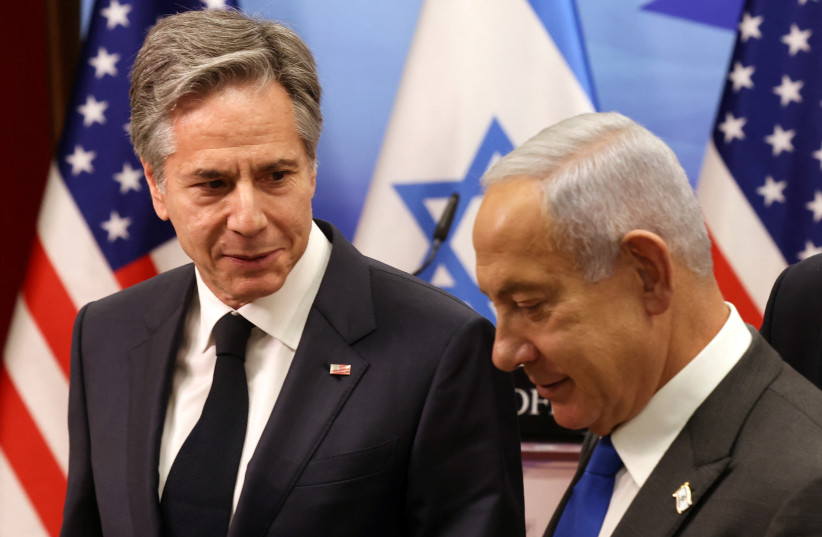
 US Secretary of State Antony Blinken (L) and Israeli Prime Minister Benjamin Netanyahu give a joint press conference, on January 30, 2023 (credit: RONALDO SCHEMIDT/POOL VIA REUTERS)Enlrage image
US Secretary of State Antony Blinken (L) and Israeli Prime Minister Benjamin Netanyahu give a joint press conference, on January 30, 2023 (credit: RONALDO SCHEMIDT/POOL VIA REUTERS)

“This is a moment of profound tension for the region. This is a conflict that could easily metastasize, causing even more insecurity and suffering,” he told reporters in Doha.

The trip comes after a drone strike in Beirut killed a senior Hamas leader and Israel exchanged fire with Iran-backed militia Hezbollah across its northern border with Lebanon. Washington is also rallying allies to deter attacks on Red Sea shipping by Houthi militants who control most of Yemen.

Blinken arrived in Jordan late on Saturday and met King Abdullah on Sunday before traveling to Qatar for meetings with Emir Sheikh Tamim bin Hamad al-Thani and Prime Minister Mohammed Bin Abdulrahman al-Thani, who also serves as foreign minister.

In Doha, Blinken said discussions included efforts to free the more than 100 hostages still believed to be held by Hamas after an earlier agreement mediated by Qatar broke down.

Qatar’s prime minister said the killing of a Hamas leader by an Israeli drone strike has affected Doha’s ability to mediate between the Palestinian group and Israel.

Washington wants Israel’s Arab neighbors to play a role in reconstruction, governance and security in Gaza in expectation that Israel’s assault will eliminate Hamas, which has run the territory since 2007, officials have said.

The US delegation aims to gather Arab states’ views on the future of Gaza before taking those positions to Israel, the US official said, acknowledging that stances would be far apart.

Blinken will end the day in the United Arab Emirates.

 A humanitarian crisis?

In a camp for displaced people in Rafah, southern Gaza, some Palestinians called on Blinken to live up to calls for a two-state solution to the conflict.

“We hope that it is a visit for our benefit, for peace’s benefit, and for the benefit of establishing a Palestinian state next to a Jewish state, in line with UN resolutions … and with what America has been calling for,” said Moussa al-Atawneh, a 76-year-old displaced man.

In Amman, Blinken visited a World Food Programme (WFP) warehouse storing canned food bound for Gaza.

WFP acting country director for Palestine Laura Turner said ahead of a meeting with Blinken that he should push to halt the conflict and for Israel to open border crossings into northern Gaza.

“That’s where the population is that we haven’t been able to access for six weeks and we’re most concerned about,” Turner said, adding that aid sent north from southern Gaza was being seized en route by other Palestinians also in dire need of food.

Blinken said the US was working to keep aid routes into the strip open and to multiply them.

“We are intensely focused on the very difficult and indeed deteriorating food situation for men, women, and children in Gaza, and it’s something we’re working on 24/7,” Blinken said.
In this explainer, we offer a comprehensive breakdown, offering essential insights ahead of this weekend’s crucial discussion.

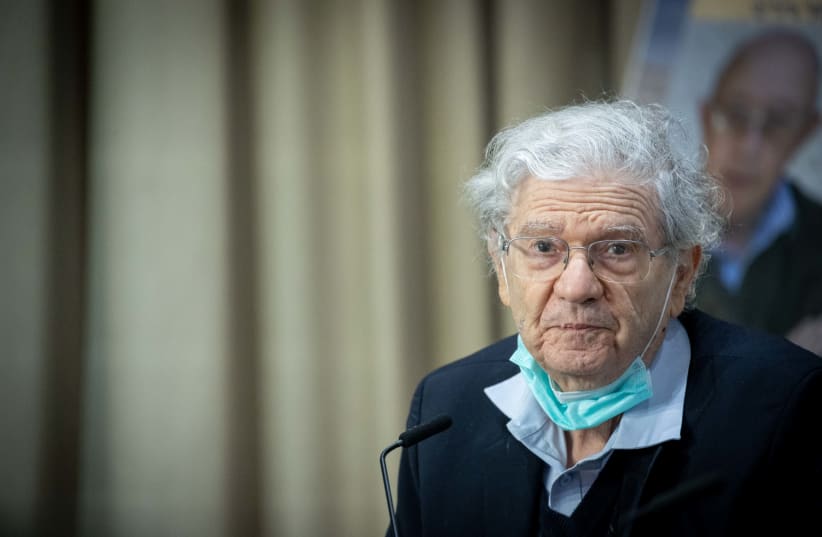
Former Chief Justice of Supreme Court and holocaust survivor Aharon Barak at the President's residence in Jerusalem, on April 4, 2021. (photo credit: YONATAN SINDEL/FLASH90)
Former Chief Justice of Supreme Court and holocaust survivor Aharon Barak at the President’s residence in Jerusalem, on April 4, 2021.
(photo credit: YONATAN SINDEL/FLASH90)
The International Court of Justice in The Hague is set for a significant session this Thursday, where it will deliberate on the lawsuit South Africa has brought against Israel.

In this explainer, we offer a comprehensive breakdown, offering essential insights ahead of this weekend’s crucial discussion.

Why send an Israeli judge to the hearing? In such international legal settings, countries involved – either as plaintiffs or defendants – have the prerogative to appoint a judge to the panel. This panel, inclusive of fifteen judges from various global nations, will now include Israel’s former Supreme Court President, Aharon Barak.

The Israeli defense team

Joining Barak is Prof. Malcolm Shaw, a 76-year-old British lawyer. In addition, in Israel’s defense are two notable figures: Gilad Noam, Deputy International Chief Prosecutor and Tal Baker, Chief Prosecutor of the Foreign Ministry.

Why Aharon Barak? His selection comes due to his esteemed stature as one of Israel’s most prominent judges. His judicial tenure, especially in the Supreme Court, is marked by significant rulings on security and the IDF. Moreover, Barak’s legal writings and rulings are internationally respected, particularly in human rights – a crucial focus of the court.

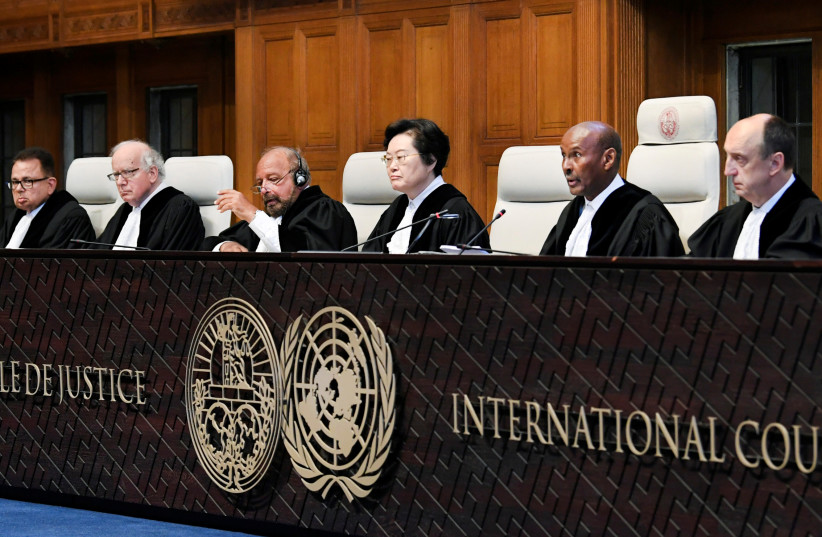
 Judges are seen at the International Court of Justice before the issue of a verdict in the case of Indian national Kulbhushan Jadhav who was sentenced to death by Pakistan in 2017, in The Hague, Netherlands July 17, 2019 (credit: REUTERS/PIROSCHKA VAN DE WOUW)Enlrage image
Judges are seen at the International Court of Justice before the issue of a verdict in the case of Indian national Kulbhushan Jadhav who was sentenced to death by Pakistan in 2017, in The Hague, Netherlands July 17, 2019 (credit: REUTERS/PIROSCHKA VAN DE WOUW)

Barak was preferred over Dorit Beinisch, his successor as Supreme Court President, and other proposed candidates. These nominations were part of a meticulous process led by a legal team tasked with determining Israel’s representatives at The Hague. Ultimately, Barak’s nomination, strongly recommended by many, was endorsed by Attorney-General Gali Baharav-Miara and Prime Minister Benjamin Netanyahu.

How does the ICJ operate and make rulings?

The International Court of Justice functions with a bench of 15 judges from different countries, ensuring diverse legal perspectives. Chosen by the UN’s General Assembly and Security Council, these judges serve nine-year terms.

Every three years, elections refresh five of these positions. This structure not only reflects the continental legal system of Europe but also accommodates the common law traditions of the United States, Britain, Canada, India, and Israel, alongside other legal systems.

The court’s proceedings mirror those of conventional courts. Hearings commence following a state’s formal complaint submission, detailing the petition’s rationale and its request for adjudication. The defendant state is then required to respond and challenge the claims.

The upcoming hearing, a matter of significant international interest, will be accessible via live broadcast on the UN’s internet television channel.


IDF finds evidence of Iran training Hamas in precision rockets

These various weapons systems were found only after traversing 100 meters of tunnel space in an area that itself had been identified by Israeli intelligence as requiring deeper investigation.

IDF troops of the Nahal Brigade operate in Gaza, January 7, 2024 (IDF Spokesperson’s Unit)

The IDF announced on Sunday that its intelligence apparatus has obtained evidence of Iranian involvement in training Hamas to manufacture and fire precision rockets and other strategic weapons.

There was a direct connection between the timing of the announcement and the IDF’s penetration and taking over of a large strategic tunnel in the Daraj Tuffah area of northern Gaza in recent days.

As part of the operation, the IDF brought in experts to analyze the long-range and precision rockets and other items it found there.

The IDF declined to specify exactly what signs there were of Iranian training and guidance in the manufacturing and firing of the weapons, but in the past, some weapons have had Iranian signs or Persian words on them.

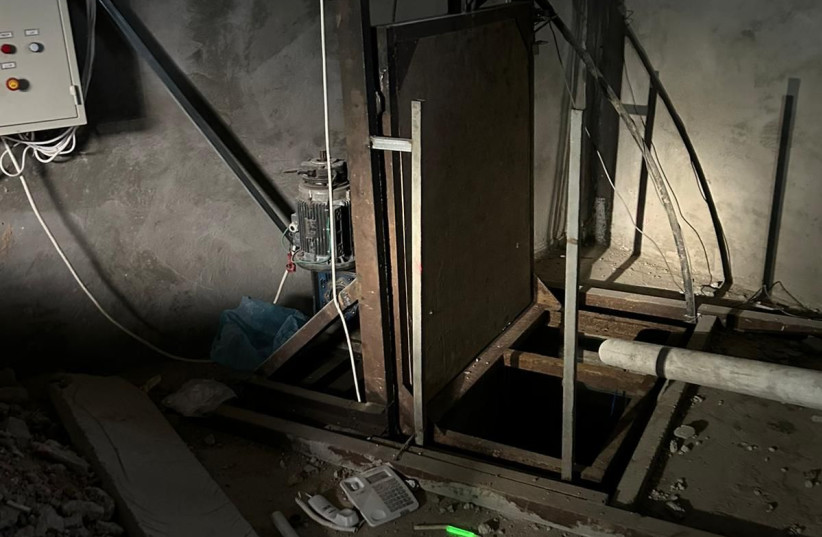
 Underground elevator discovered by IDF soldiers, January 7, 2024 (credit: IDF SPOKESPERSON'S UNIT)Enlrage image
Underground elevator discovered by IDF soldiers, January 7, 2024 (credit: IDF SPOKESPERSON’S UNIT)

In other instances, there have been guidebooks or messages recovered from electronic devices with connections to the Islamic Republic.

Though Hamas is an independent entity, Israeli intelligence has said for years that the terror group could not have pulled off the October 7 surprise attack or reached the level of its current fighting prowess without general funding, logistics support, and training from Tehran.

However, such statements are often made in a general manner, and Sunday’s findings were more direct evidence than usual of the ayatollahs’ involvement.

These various weapons systems were found only after traversing 100 meters of tunnel space in an area that itself had been identified by Israeli intelligence as requiring deeper investigation.

Those Hamas forces guarding the area also put up a more significant fight, including face-to-face clashes, than the terror group is often putting up in other areas, where its tactics tend to be sudden hit and runs popping out of tunnel shafts and fleeing back to those shafts.

Drones and helicopters were critical to assisting IDF Nahal land forces during the battle.

Hamas’s last stronghold in northern Gaza falls

Daraj Tuffah was viewed by the IDF as the last stronghold of Hamas in northern Gaza after the fall of Jablia on December 19 and the fall of most of Gaza City in mid-November.

Nahal Commander Col. Yair Zuckerman said, “We are in Daraj Tuffah along with our integrated battle teams. In recent days, we encountered the enemy, many cells, [terror] infrastructure and boobytraps…we found defensive tunnels and rocket firing platforms, from right here,” signaling where he was standing.

Zuckerman was appointed to lead Nahal forces on October 7 after its pre-war commander, Col. Jonathan Steinberg, was killed on his way to try to rescue Israelis in the South under invasion by Hamas.

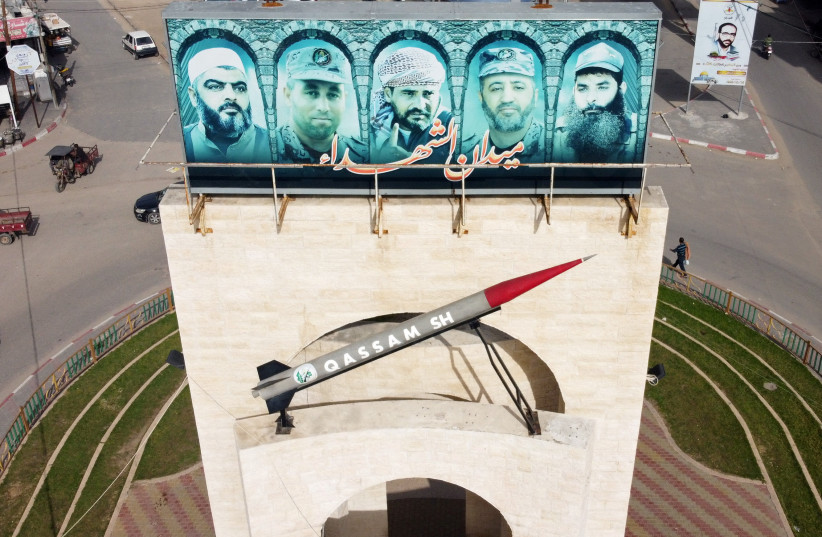
 A picture taken with a drone shows a monument of a Hamas rocket with pictures of late commanders from armed Palestinian factions, in Rafah in the southern Gaza Strip February 2, 2021 (credit: REUTERS/MOHAMMED SALEM)Enlrage image
A picture taken with a drone shows a monument of a Hamas rocket with pictures of late commanders from armed Palestinian factions, in Rafah in the southern Gaza Strip February 2, 2021 (credit: REUTERS/MOHAMMED SALEM)

The invasion of Daraj Tuffah was broken down roughly into two stages over around two weeks of fighting.

In the first 4-7 days, the fighting was the heaviest, with much more organized attacks by Hamas forces.

During the second stage, Hamas terrorists still mounted a significant challenge but started fighting more using hit-and-run tactics from underground areas.

Over Friday and Saturday, the IDF took out an area where Hamas had set up 30 platforms for firing rockets and from where it had even fired rockets on Ashkelon and toward Ashdod in recent days.

https://www.jpost.com/israel-hamas-war/article-781147