Hezbollah took responsibility for the launch. IDF said artillery forces targeted the source of the fire.
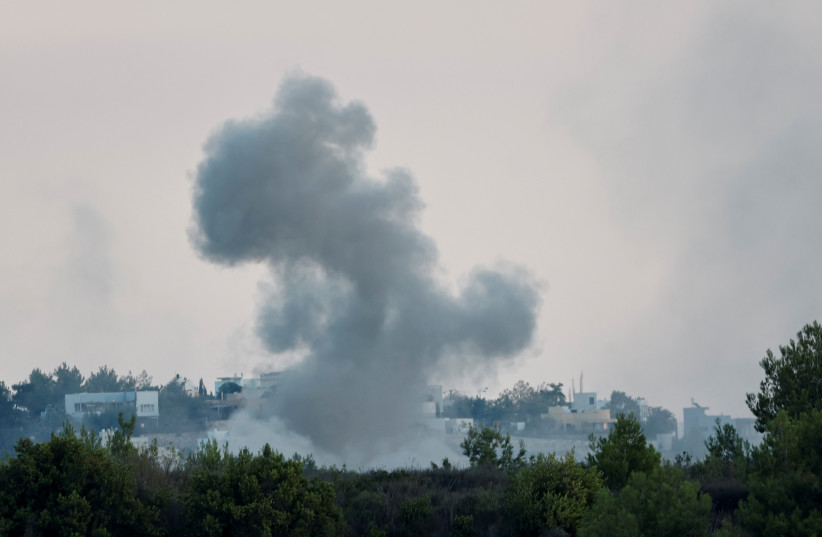
By JERUSALEM POST STAFF, YONAH JEREMY BOBUpdated: OCTOBER 15, 2023 11:02Smoke rises after Israeli shelling , as seen from Lebanese side, near the border with Israel, in Alma Al-Shaab, southern Lebanon, October 13, 2023(photo credit: REUTERS/THAIER AL-SUDANI)
An anti-tank missile was fired at the northern Israeli moshav Shtula, near the Lebanese border, the IDF said.
Hezbollah took responsibility for the launch. IDF said artillery forces targeted the source of the fire.
The IDF was also striking targets in southern Lebanon after another anti-tank missile was fired at an Israeli military position in the North, it said.
At least four civilians were reportedly wounded in the incident, with one man in his 40s murdered following failed resuscitation attempts, Magen David Adom said. MDA added it rushed the other wounded civilians to the Galilee Medical Center in Nahariya for further treatment.
Two more men in their 40s are considered in moderate condition, MDA added.
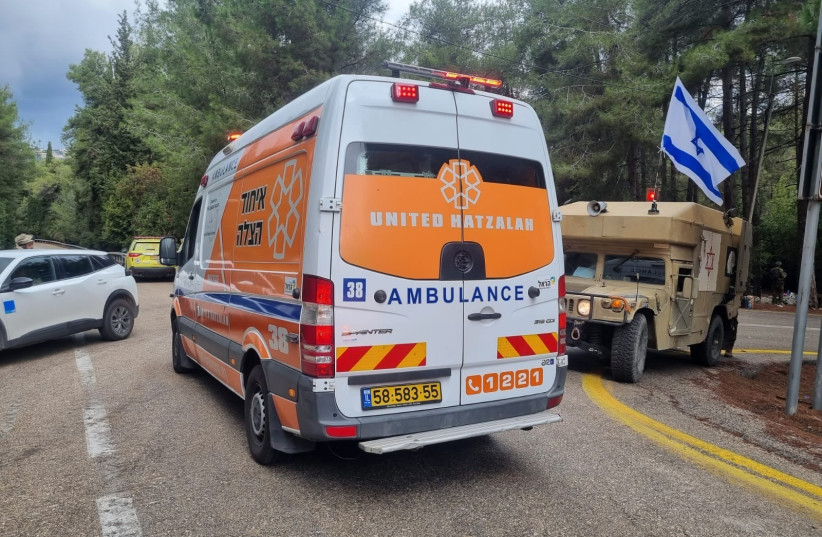
United Hatzalah ambulance seen in northern Israel October 15, 2023 (credit: UNITED HATZALAH)
Israel creates security zone near Lebanon border
The IDF on Sunday created a four-kilometer security zone in northern Israel to keep any civilians who do not live in the area out until further notice.
It said this was necessary after the continued firing of rockets, attempted invasions, and other tension on the northern border.
Further, the IDF said that those within two kilometers of the border should remain in bomb shelters and safe rooms.
Residents of the northern moshav were told to seek shelter immediately. Later, the Kiryat Shmona municipality also told the border city’s residents to seek shelter following exchanges of fire on the border
Residents of the nearby kibbutzim of Yiftach, Menara, Maayan Baruch, Misgav Am, Yeron, Bar’am, Tzivon, Dan, Daphna, Snir and Kfar HaGiladi were all told to seek shelter later on Sunday morning.
By REUTERSUpdated: OCTOBER 15, 2023 08:29A senior Israeli official accused Iran on Sunday of trying to open a second war front by deploying weapons in or through Syria as Israel steps up a counter-offensive in Gaza to the south.
Responding to a post on the X social-media platform that posited such a scenario, Joshua Zarka, head of strategic affairs for Israel’s Foreign Ministry, said: “They (Iranians) are.”
The original post also said “the Israelis are determined to prevent” such developments. To that, Zarka responded” “We are.”
Syria accused Israel of carrying out strikes against Damascus and Aleppo airports last week.
Indications are growing that Hezbollah could use chemical weapons to attack Israel in the next war. The group has access to a Syrian military research site that runs an active non-conventional weapons program, a new report warns.
Israeli officials said previously that Syria was purchasing large quantities of chemical substances and trying to produce deadly nerve gas at the CERS facility. Intelligence sources say that President Bashar al-Assad tasked a highly secretive unit, Branch 450, with the project.
According to the Alma research center, Syria’s CERS complex is now controlled by Iran and Hezbollah. The facility is an integral part of the arms supply route to Lebanon and also serves as a storage site for the Shiite axis, the report says.
The Alma report warns that Hezbollah may be stockpiling missiles or rockets fitted with chemical weapons, such as Sarin nerve gas, at the heavily guarded complex. If given the order, these weapons could be transferred to Lebanon.
Alma’s bottom line: The use of chemical substances by Hezbollah in a future war with Israel cannot be ruled out. In the event of war, the IDF will likely target chemical weapons stockpiles located either in Syria or Lebanon.
IDF trains for chemical attack
Israel has been preparing for the possibility of a Hezbollah chemical weapons attack for some time. While assessing the threat level is difficult given the secrecy surrounding the issue, defense officials believe that the danger exists.
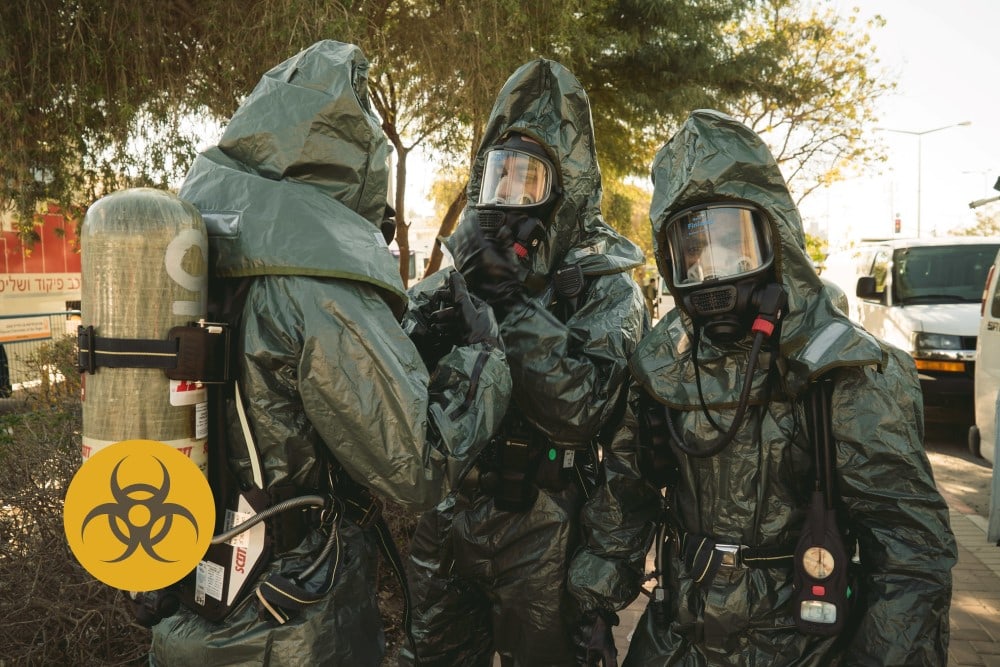
The IDF is already training forces to deal with a potential non-conventional attack from Lebanon. The army’s elite combat engineering unit, Yahalom, now specializes in detecting and neutralizing chemical and biological weapons, N12 News reported.
Among other things, the unit is mobilized to examine whether rockets that explode inside Israel contain toxic materials, the report said.
Yahalom also specializes in underground warfare and exposing tunnels, another route that may be used by Hezbollah to spread toxins in Israeli territory. Notably, forces in the unit undergo commando training to further expand their ability to respond to urgent threats.
Last year, a major war drill tested the IDF’s response to a Hezbollah assault that uses chemical substances to disable soldiers and civilians. This scenario appears to be based on unspecified intelligence information that likely remains classified due to its sensitivity.
Hezbollah promises ‘surprises’
Israeli fighter jets bombed Syrian chemical weapons facilities in 2021 and 2020, the Washington Post and Ynet reported. One of the strikes killed a senior officer and an engineer working in a secret lab, the reports said.
The attacks signaled that Israel has superb intelligence about Syria’s non-conventional weapons program. Looking forward, Israel’s intel arms will likely spot signs of mass production and large storage depots. However, detecting the transfer of smaller quantities to Hezbollah could be harder.
Hezbollah itself has been mum about any plans for non-conventional warfare. However, the group’s leaders have threatened Israel with “surprises” that will only be revealed in the next war.
Notably, Israel has broader safeguards in place to counter chemical and biological weapons. These include intelligence units tracking non-conventional threats, and a secret research facility dedicated to developing scientific defenses against attacks.