Syrian state media and the Syrian Observatory for Human Rights reported an Israeli air force attack overnight Tuesday in the vicinity of Deir Ezzor, the largest city in eastern Syria and the seventh largest in the country, located 450 km northeast of the capital Damascus, on the banks of the Euphrates River.
According to SOHR, the Syrian air force operates a base in the area, and Iranian militias were deployed near the targeted positions, and regularly move from Iraq to Syria and back through illegal routes.
SOHR reported that unidentified warplanes were flying over the region when a “violent explosion” was heard in the Katibat Al-Radar area on the peak of Harabish Mountain in the Deir Ezzor countryside.
“Three explosions were heard in positions of Iranian militias in the Al-Hamida area in Al-Bokamal near Syrian-Iraqi borders, caused by attacks by unidentified warplanes on these positions. The extension of casualties and materials damages was not revealed,” SOHR reported.
Deir Ezzor was previously attacked by unidentified drones on September 5. The attack destroyed a weapons warehouse of the Iranian proxy militias that was located inside a Deir Ezzor neighborhood.
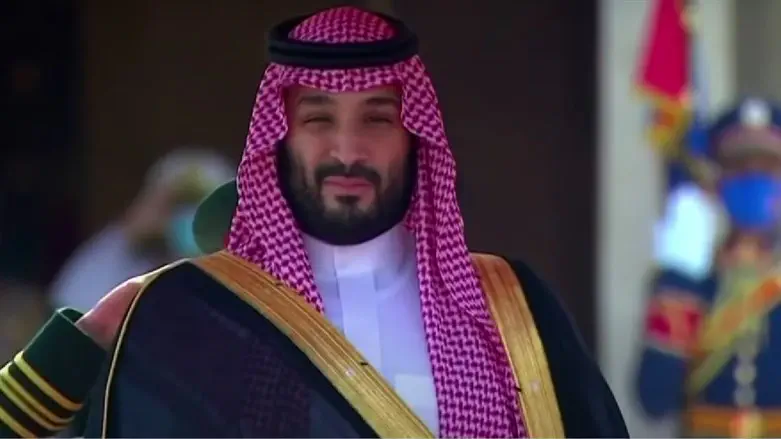
Saudi Crown Prince and Prime Minister Mohammed Bin Salman (MBS) and Israel’s Prime Minister Bibi Netanyahu have given their clearest indication to date that current talks between them to normalise relations between Saudi Arabia and Israel could include their reaching agreement on the terms to successfully implement the Hashemite Kingdom of Palestine solution (HKOPS).
Jordan, the PLO and Hamas could accept this agreed Israel-Saudi position or choose to maintain the current status quo until amendments acceptable to them are reached.
Importantly – the normalisation of relations between Israel and Saudi Arabia would not be contingent on HKOPS or any other agreed Israel-Saudi position first being implemented.
Netanyahu summed up this approach when addressing the United Nations General Assembly:
“I’ve long sought to make peace with the Palestinians. But I also believe that we must not give the Palestinians a veto over new peace treaties with Arab states. The Palestinians could greatly benefit from a broader peace. They should be part of that process, but they should not have a veto over the process.”
HKOPS is the Saudi-based 2022 proposal authored by a confidante of MBS – Ali Shihabi – whose features include:
Merging Jordan, Gaza and part of Judea and Samaria (West Bank) into one territorial entity to be governed by Jordan’s current Hashemite rulers with its capital being located in Amman – not Jerusalem
Granting equal citizenship to all residents currently living within its boundaries and Palestinian Arab refugees living elsewhere.
Dividing sovereignty in Judea and Samaria (aka “West Bank”) between Israel and the newly-created entity.
Jerusalem becoming the sole capital of Israel.
Abandoning the creation of a Palestinian state between Jordan and Israel – pursued without success by Saudi Arabia and the Arab League since 2002 – and by the United Nations since 2016.
“What is a bit curious about the crown prince’s words on the Palestinian issue is that he did not specifically tie normalisation with Israel to a two-state solution or to an outcome that gives the Palestinians a state of their own.
“He said: ‘We have good negotiations…we hope that it will reach a place that will ease the lives of the Palestinians.’ Was it deliberate, signalling a change in Saudi policy? If that is the case, this is a huge deal because it means that Saudi-Israeli normalisation may be closer than assumed.”
In fact, that’s precisely what he said: “Every day, we get closer.”
Netanyahu – in addressing the UN General Assembly – was equally optimistic on normalising relations with MBS very soon:
“There is no question. The Abraham accords heralded the dawn of a new age of peace.
“But I believe that we are at the cusp of an even more dramatic breakthrough – an historic peace between Israel and Saudi Arabia. Such a peace will go a long way to ending the Arab Israeli conflict. It will encourage other Arab states to normalize their relations with Israel. It will enhance the prospects of peace with the Palestinians. It will encourage a broader reconciliation between Judaism and Islam, between Jerusalem and Mecca, between the descendants of Isaac and the descendants of Ishmael. All these are tremendous blessings.”
author Michael Snyder queried on 7 September: “Is There A Secret Plan To Merge Jordan, Gaza And The West Bank As Part Of A Normalization Agreement Between Israel And Saudi Arabia?”
HKOPS has never been secret following its publication on 8 June 2022. Attempts by the United Nations, European Union and the international media since then to bury the existence of HKOPS have been contemptible.
Author’s note: The cartoon — commissioned exclusively for this article — is by Yaakov Kirschen aka “Dry Bones”- one of Israel’s foremost political and social commentators — whose cartoons have graced the columns of Israeli and international media publications for decades.
David Singeris an Australian lawyer who is active in Zionist community organizations in that country. He founded the “Jordan is Palestine” Committee in 1979.
Normalization talks between Riyadh and Jerusalem have increased momentum, but anyone hoping for a big Abraham Accords-style announcement may end up disappointed, analysts say
The U.S., Israel and the United Arab Emirates announced the Abraham Accords in August 2020, after months of quiet diplomacy. Three years later, American and Israeli officials are again working toward a groundbreaking normalization agreement with an Arab country — Saudi Arabia — but this time, all parties have been more public about their efforts.
When asked about talks with the Saudis in recent months, Israeli Prime Minister Benjamin Netanyahu has paraphrased former U.S. President Woodrow Wilson’s “open covenants of peace openly arrived at.” Rather than conducting diplomacy “in the public view,” as Wilson put it in his Fourteen Points more than a century ago, Netanyahu has repeatedly said he is seeking “open covenants secretly, or at least discreetly, arrived at.”
Saudi Crown Prince Mohammed bin Salman made his most open and optimistic comments to date about the prospects of establishing diplomatic relations with Israel, telling Fox News last month that “every day we get closer” to what would potentially be “the biggest historical deal since the end of the Cold War.”
Less surprisingly, Israeli Prime Minister Benjamin Netanyahu said days later that he was “delighted” by MBS’ remarks and at the United Nations General Assembly last month, said “we are at the cusp of…an historic peace with Saudi Arabia. Such a peace will go a long way to ending the Arab-Israeli conflict…Peace between Israel and Saudi Arabia will truly create a new Middle East.”
Another turning point came when Israeli Tourism Minister Haim Katz became the first member of the Jewish state’s cabinet to openly visit Saudi Arabia last week, attending a United Nations World Tourism Organization conference. Israeli Communications Minister Shlomo Karhi and Knesset Economics Committee Chairman David Bitan traveled to Riyadh on Monday.
“I don’t know the bottom line, why they approved me,” Katz told Israel’s Channel 14 on Tuesday. “We have been working on this for three weeks, and only a few days ago did we understand that it’s happening. We received official messages from the highest levels.”
“The reason it has become much more intense lately is because the Biden administration is determined to do this. That’s where the impetus is coming from,” Professor Bernard Haykel, director of Princeton University’s Institute for Transregional Study of the Contemporary Middle East, said.
IDF Brig.-Gen. (res.) Amir Avivi, founder and chairman of the largest Israeli NGO of national security veterans, the Israel Defense and Security Forum, and a Netanyahu ally, pointed out that the prime minister has been talking about the potential for normalization with Saudi Arabia for years and even, to some extent, campaigned on it before last year’s Knesset election, but was not able to make headway because of the Biden administration’s hesitation.
“I think there was a challenge on the American side to get over the problems of the past with Saudi Arabia, as we saw in the beginning of Biden’s term following [the killing of U.S.-based Saudi columnist Jamal] Khashoggi. It took the Americans a long time to get past it and understand the key to change is in this agreement. The minute they understood, that was the minute that Netanyahu, MBS and Biden tried to make this public,” he said.
Jonathan Schanzer, senior vice president for research at the Foundation for the Defense of Democracies, called that period “a massive blunder on the part of the Biden administration. They had the Saudis on the two-yard line back in the early days of this administration, but because of anti-Saudi animus and a total unwillingness to credit the Trump administration with any progress on any front, they postponed the entire thing.”
Only after Saudi Arabia entered a China-brokered agreement with Iran did the administration “decide it needs to prioritize what should have been a priority from the jump,” Schanzer said.
Now, the Biden administration is in a rush to complete a deal before entering a presidential election year, Schanzer explained, and the recent gain in momentum as indicated by MBS’ interview and Netanayhu’s speech to the U.N. could be connected to that timeline.
“Here it’s being done more or less openly, though we don’t know what is happening in the talks,” said Yoel Guzansky, a senior fellow at the Institute for National Security Studies in Israel and a former official in Israel’s National Security Council.
Professor Bernard Haykel, director of Princeton University’s Institute for Transregional Study of the Contemporary Middle East said that allowing Israeli cabinet ministers into Saudi Arabia is “a sign of goodwill because they’re negotiating. I don’t think it’s much more than that,” he said.
“The reason it has become much more intense lately is because the Biden administration is determined to do this. That’s where the impetus is coming from,” he said.
That Katz was in Riyadh this week is “no coincidence,” Avivi posited. “There is a process of preparing Saudi public opinion and opinion in the Middle East broadly, ahead of the announcement.
“They are normalizing the public’s understanding,” he quipped.
Yoel Guzansky, a senior fellow at the Institute for National Security Studies in Israel and a former official in Israel’s National Security Council, similarly noted that Katz’s visit to Riyadh came after MBS spoke publicly about normalization talks, which “gave it legitimacy in the kingdom and abroad, making it easier for Saudis to go with it.”
Guzansky said that “there is really an indication that things are warming up.”
He contrasted the current process with the Abraham Accords, “where suddenly there was an agreement announced.”
“The Saudis are running forward because this is a strategic interest of the highest degree,” said IDF Brig.-Gen. (res.) Amir Avivi.
“Here it’s being done more or less openly, though we don’t know what is happening in the talks,” he said.
Guzansky also warned that the openness of the Saudi-Israel normalization discussion can invite “spoilers,” whether within the kingdom, in Iran or even in Israel, with the political right arguing against possible concessions to the Palestinians and Opposition Leader Yair Lapid expressing concern about a Saudi nuclear program.
By speaking openly about the talks and allowing a minister to visit Israel, the kingdom is sending “a message to the Americans that they won’t let the Palestinians get in the way. The Saudis are running forward because this is a strategic interest of the highest degree,” Avivi said.
Schanzer pointed out that contacts between Saudi Arabia and Israel in the areas of security, intelligence, technology and more have been known for years, so “it doesn’t really matter when an agreement is signed, so long as the process of normalization continues to grow, and I think it already is,” Schanzer said.
For Schanzer, advancing along a “road map,” as he said one Saudi interlocutor described it, is more important than a signing ceremony.
“Normalization is a process, not an event,” he emphasized.
In fact, Schanzer added, there may not be a formal agreement or a White House ceremony at all, because security guarantees or allowing Saudi Arabia to enrich uranium might not get the necessary approval in Congress, and the governing coalition in Israel may not be willing to make compromises on the Palestinian front.
Speaking from Riyadh, Haykel also posited that a peace agreement between Israel and Saudi Arabia will happen “phase by phase,” and not be implemented all at once like the Abraham Accords.
“We’re far from an agreement. I’m not sure an agreement will actually materialize,” he said.
Haykel also criticized Israel for its frequent open discussion of normalization talks with Saudi Arabia and other Arab states.
“Israelis have historically, with all Arabs, been incredibly embarrassing and deeply undiplomatic and insensitive to Arab sensibilities. They don’t care if they embarrass their negotiating partners,” he said.
While most Saudis would not oppose normalization with Israel, the leaders have concerns about security, Haykel said.
While Israeli Muslim pilgrims will not have a problem visiting Mecca, Haykel said: “I don’t think Saudi Arabia will be open to Israeli tourists anytime soon…largely for their own protection. They don’t want an incident here with Israelis where someone gets hurt because of some lunatic.”
The Saudi leadership is also concerned about their own safety following normalization with Israel.
“Netanyahu won’t get a bullet in his head for making peace with Saudi Arabia, but the Saudi leadership is at risk because there are violent people here,” Haykel said.
MBS is still proceeding with the negotiations, because “it’s in [the Saudi] national interest,” Haykel added, noting that nationalism has played an increasingly large role in Saudi Arabia’s foreign policy under MBS’ leadership.