Israel urges US to provide nuclear protection for Saudi Arabia

August 9, 2023


Israel urges US to provide nuclear protection for Saudi Arabia

Israeli FM stressed that preventing Iran from obtaining a nuclear weapon should be the Biden administration’s top priority in the region.

By World Israel News Staff

Foreign Minister Eli Cohen urged the Biden administration to pledge to defend Saudi Arabia from a potential nuclear weapons attack by Iran, touching on Riyadh’s reported demand for its own nuclear development program as a condition for peace with Jerusalem.

In an editorial published in the Wall Street Journal amid swirling rumors that Saudi Arabia is gearing up to normalize relations with Israel in a U.S.-brokered peace agreement, Cohen wrote that Washington should provide backing to the Gulf Kingdom against Iranian nuclear aggression.

“South Korea, despite living under the shadow of a nuclear-armed neighbor and having the means to develop its own nuclear weapons, has abstained from nuclear-weapons development,” Cohen wrote.

“The U.S.’s defense commitment acts as South Korea’s deterrent against Northern aggression. A comparable American defense pledge could reassure Middle Eastern nations, primarily Saudi Arabia and the Gulf states.”

Cohen stressed that preventing Iran from obtaining a nuclear weapon should be the Biden administration’s top priority in the region.

Should Tehran successfully create a nuclear bomb, “it would almost certainly ignite a regional nuclear arms race,” Cohen wrote.

Other regional powers, such as Turkey and Saudi Arabia, would feel pressured to obtain nuclear weapons, “potentially plunging the entire Middle East into conflict,” he added.

In recent weeks, Hebrew-language media has buzzed with contradictory reports about whether or not Israel would accept Saudi Arabia launching a nuclear development program. Such an agreement would come with assurance from the U.S. that the Gulf Kingdom would strictly use the technology for civilian purposes, such as green energy.

In March, the Wall Street Journal reported that a normalization deal between Saudi Arabia and Israel would be explicitly conditioned on a U.S. commitment to back the Gulf kingdom’s aspirations for a civilian nuclear program.

Saudi Arabia has long sought to utilize its extensive uranium reserves for a civilian nuclear program.

Riyadh also seeks to gain a commitment from Washington on weapon supplies as well as security guarantees.


Cohen’s statement comes as the US works to bring about diplomatic relations between Jerusalem and Riyadh.

 Foreign Minister Eli Cohen talks during a news conference with Cyprus Foreign Minister Constantinos Kombos and Greek Foreign Minister Nikos Dendias at the Presidential Palace in Nicosia, Cyprus March 31, 2023 (photo credit: REUTERS/YIANNIS KOURTOGLOU)
Foreign Minister Eli Cohen talks during a news conference with Cyprus Foreign Minister Constantinos Kombos and Greek Foreign Minister Nikos Dendias at the Presidential Palace in Nicosia, Cyprus March 31, 2023
(photo credit: REUTERS/YIANNIS KOURTOGLOU)

The US should give Saudi Arabia a guarantee to defend it against Iranian nuclear aggression as part of a normalization deal with Israel, Foreign Minister Eli Cohen wrote in The Wall Street Journal overnight Tuesday.

Cohen’s article comes as the US works to bring about diplomatic relations between Jerusalem and Riyadh. Saudi Arabia has asked for numerous sweeteners from the US, including a civilian nuclear program, which has raised concerns in Israel.

The foreign minister compared the nuclear threat of Iran to other countries in the region to North Korea’s nuclear threat to South Korea and beyond.

“South Korea, despite living under the shadow of a nuclear-armed neighbor and having the means to develop its own nuclear weapons, has abstained from nuclear-weapons development,” Cohen wrote. “The US’s defense commitment acts as South Korea’s deterrent against Northern aggression. A comparable American defense pledge could reassure Middle Eastern nations, primarily Saudi Arabia and the Gulf states.”

Iran’s potential nuclear arsenal 

If Iran builds a nuclear weapon, “it would almost certainly ignite a regional nuclear arms race,” with Saudi Arabia, Gulf States, Egypt and Turkey considering doing the same and “potentially plunging the entire Middle East into conflict,” Cohen wrote.

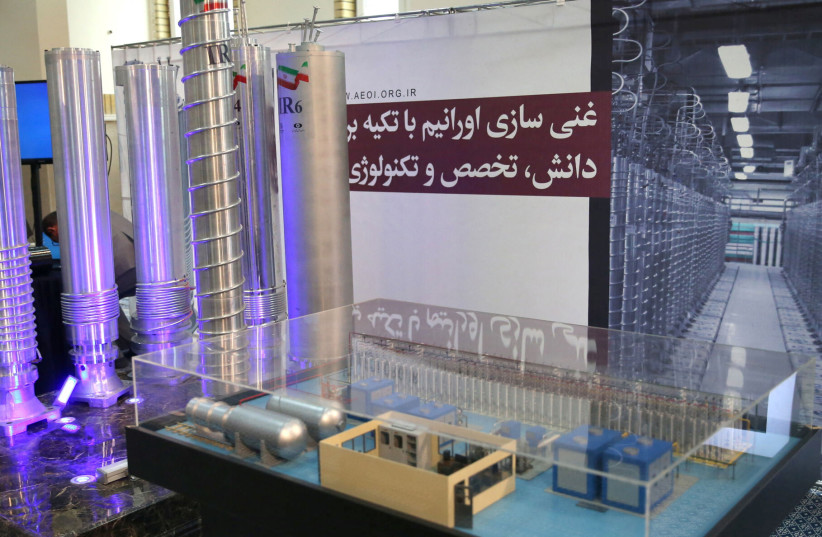
 Iranian centrifuges are seen on display during a meeting between Iran's Supreme Leader Ayatollah Ali Khamenei and nuclear scientists and personnel of the Atomic Energy Organization of Iran (AEOI), in Tehran, Iran June 11, 2023. (credit: Office of the Iranian Supreme Leader/WANA (West Asia News Agency) via REUTERS)Iranian centrifuges are seen on display during a meeting between Iran’s Supreme Leader Ayatollah Ali Khamenei and nuclear scientists and personnel of the Atomic Energy Organization of Iran (AEOI), in Tehran, Iran June 11, 2023. (credit: Office of the Iranian Supreme Leader/WANA (West Asia News Agency) via REUTERS)

The Israeli National Security Council has been examining the potential impact of the various possibilities on Israel’s security, with a positive approach to advance its existing under-the-radar ties with Saudi Arabia and make them public.

US-Saudi negotiations 

Israeli officials are not currently part of the negotiations taking place between the Americans and the Saudis, and as such have had little to say openly about the kingdom’s requests.

“It’s all plus-plus, no minuses,” a senior diplomatic source said. “It’s in our national security interest to have relations with Saudi Arabia.”

While neither Saudi Arabia nor Iran has an acute need for alternative energy, since both are major oil producers, Riyadh clearly looks at Tehran’s civilian uranium enrichment program, much of which was permitted in the 2015 nuclear agreement with world powers, and wants something similar, the source explained.

“Israel wouldn’t want proliferation anywhere, but the most important thing is to stop Iran from getting a nuclear weapon,” he added.

Asked in an interview with KAN last week whether Israel would oppose Saudi civilian uranium enrichment, National Security Adviser Tzachi Hanegbi would not say, but said that it was “unreasonable” to think the US would allow a military nuclear program.

“Israel will not concede anything that will erode its security,” he said.

As the US-Saudi defense agreement is meant to come in conjunction with normalization with Israel, it is unlikely to go further than the Israeli security establishment deems safe. In addition, an agreement that Israel would view as a security problem would likely have difficulty getting the necessary 67 votes in the Senate needed to be approved.

The Biden administration would like the deal to be completed by the end of 2023 and to avoid a prolonged fight in Congress during an election year.

A further element of Saudi normalization talks is the tangible concessions Riyadh requires Israel to make toward the Palestinians.

The kingdom seeks greater concessions than Israel made in conjunction with the 2020 Abraham Accords when Israel agreed to drop its plan to apply sovereignty to West Bank settlements and established diplomatic relations with the United Arab Emirates and Bahrain. Normalization would require concrete steps towards Palestinian statehood, not just a commitment not to annex settlements, diplomatic sources have said.


Israel-Saudi deal unlikely in near future – opinion

A deal between Israel and Saudi Arabia would effectively be a ginormous step forward in ending the Israel-Arab conflict.

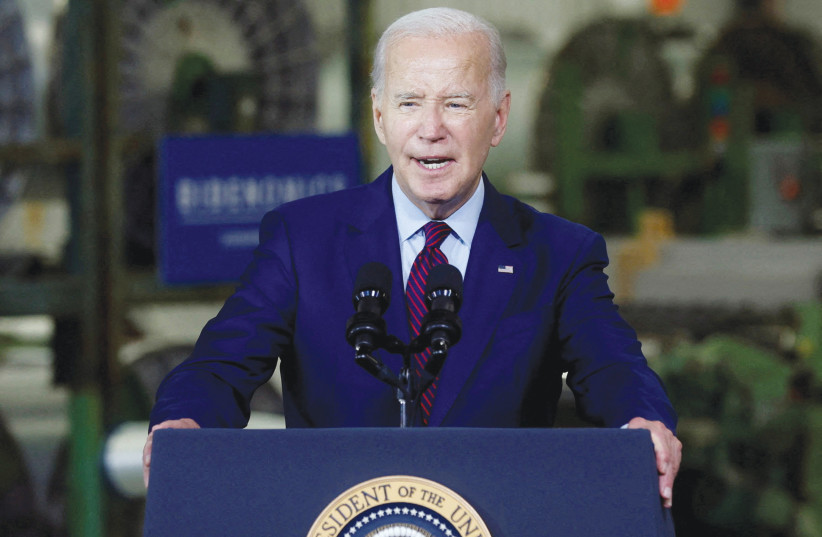
 ACCORDING TO Thomas Friedman, US President Joe Biden is still not committed to a Saudi-Israeli deal. (photo credit: JONATHAN ERNST/REUTERS)
ACCORDING TO Thomas Friedman, US President Joe Biden is still not committed to a Saudi-Israeli deal.
(photo credit: JONATHAN ERNST/REUTERS)

Speaking metaphorically, a deal between Israel and Saudi Arabia would be the jewel in the crown for the Abraham Accords.

Speaking practically – and tactically, a deal between Israel and Saudi Arabia would effectively be a ginormous step forward in ending the Israel-Arab conflict.

There are rumors, there are press reports, there are statements from interested partners scattered near and far. And The New York Times’ Thomas Friedman is, once again, out in front explaining what he thinks will happen.

Following a sit-down with US President Joe Biden, Friedman wrote up his impressions and prognostications. They come with a caveat. Friedman has a long and trusted relationship with Biden. Friedman is probably one of Biden’s closest unofficial advisers on foreign policy.

And Friedman’s column in The New York Times following that meeting – a column in which he shares his reservations and the many potential pitfalls to be navigated, lays out a very complicated path to a Saudi/Israel deal.

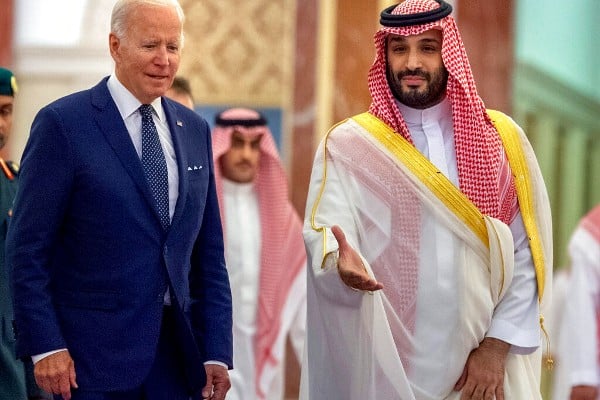
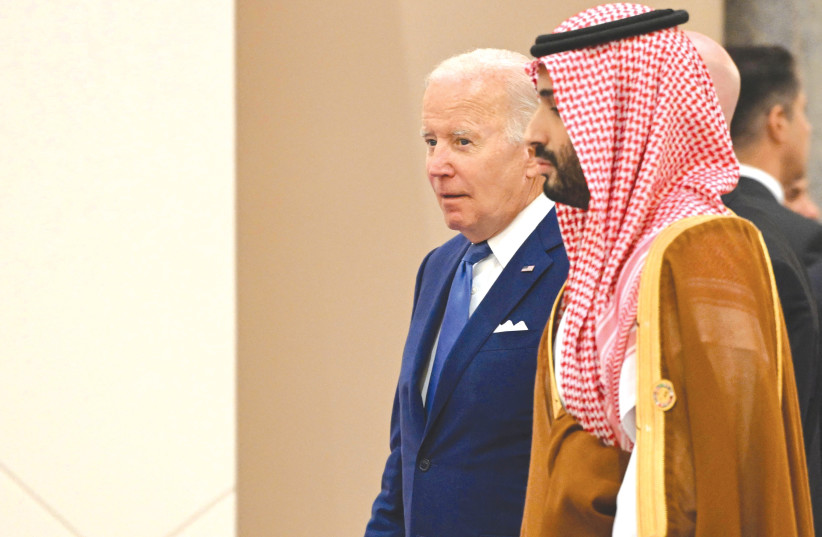
 US PRESIDENT Joe Biden and Saudi Crown Prince Mohammed bin Salman in Jeddah, last July: Saudi Arabia is not able to give up the American defensive shield, and believes Israel has a role in securing this. (credit: MANDEL NGAN/REUTERS)US PRESIDENT Joe Biden and Saudi Crown Prince Mohammed bin Salman in Jeddah, last July: Saudi Arabia is not able to give up the American defensive shield, and believes Israel has a role in securing this. (credit: MANDEL NGAN/REUTERS)

According to Thomas Friedman – and remember, he is one of Biden’s besties – the biggest obstacle to a Saudi-Israeli deal seems to be that Biden is still not committed to a Saudi-Israeli deal.

Friedman describes the potential deal, the deal almost in the making, as a quadrilateral deal. A deal between the United States, Saudi Arabia, Israel, and the Palestinians. And that’s just one of the problems in the deal as described, as envisioned, and as dissected, by Thomas Friedman.

And it is the only glimpse we have into the thinking of the president of the United States, who, on this issue, has remained closed-lipped.

There are so many other problems with the plan. For example: Saudi King Salman, is virtually retired at the age of 87. The king has repeatedly and publicly said that there will be no deal with Israel until the Palestinian issue is resolved.

Salman is now out of the public eye. He has handed over operational control of the kingdom to his son, Prince Mohamed bin Salman. Practically the only public sentiment expressed by the king since the Abraham Accords were announced on August 13, 2020, is this: No deal with Israel until the Palestinian issue is resolved.

In other words, the Palestinian issue and all it implies is very important to King Salman. But the Saudi monarch is old school. That sentiment runs counter to new conventional wisdom which is that Arab and Muslim leadership, including the now-ruling son of King Salman, namely Prince Bin Salman, have lost their patience with the Palestinians.

And that is at the core of why the Palestinians were, and still are, against the Abraham Accords. Prior to the Abraham Accords, the Palestinian issue placed them and their conflict with Israel at the center of everything in the Middle East.

The Abraham Accords proved that there is a seismic shift in attitudes. The Abraham Accords proved that Arab leaders were willing to view relations with Israel in a more nuanced and stratified manner.

The Abraham Accords proved that these leaders could separate the Palestinian/Israeli conflict, could separate the Palestinian issue from their own needs, wants, and hopes, and work together with the Jewish state on issues of mutual benefit that were easily within their reach.

Meanwhile, the United States has needs of its own. The US needs the Saudis to inject money – quite a lot of money, into Palestinian infrastructure to help them build a state. More importantly, the US needs the Saudis to slow – even stop, their overtures to China.

And most importantly, the US needs the Saudis to sign an agreement with Israel. This is where Friedman’s insight into Biden’s lack of commitment is important.

Biden/Friedman know that a Saudi deal with Israel, signed by Prime Minister Benjamin Netanyahu, is a gargantuan prize. A prize that would secure Netanyahu a position of splendor in history books, not a position tarnished by corruption and trials. Biden/Friedman know that when push comes to shove, Netanyahu is a politician, not an ideologue.

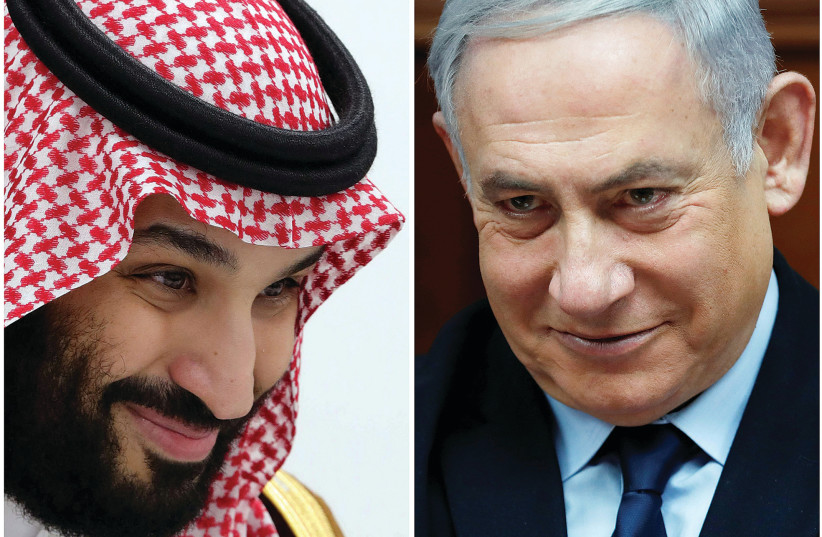
A COMPOSITE of Saudi Arabia’s Crown Prince Mohammed Bin Salman and Prime Minister Benjamin Netanyahu. Talks of an alliance between Israel and Saudi Arabia came at a time of increased contact between Israel and Arab states, with varying levels of concerns about Iran. (credit: SPUTNIK/MIKHAIL KLIMENTY/REUTERS AND RONEN ZVULUN/REUTERS)A COMPOSITE of Saudi Arabia’s Crown Prince Mohammed Bin Salman and Prime Minister Benjamin Netanyahu. Talks of an alliance between Israel and Saudi Arabia came at a time of increased contact between Israel and Arab states, with varying levels of concerns about Iran. (credit: SPUTNIK/MIKHAIL KLIMENTY/REUTERS AND RONEN ZVULUN/REUTERS)

They know that his most important goal is personal – it is to stay in power. They reason that Netanyahu will compromise on issues relating to Palestinian statehood.

But his coalition partners to his right will not compromise. And his government will fall. Biden/Friedman hope that the moderates in the opposition will jump forward to save Netanyahu and his government in the name of peace with Saudi Arabia. They perceive that the Saudi deal is that important.

Underestimating the Israeli opposition to Netanyahu

And that is a huge mistake. Biden/Friedman wrongly think that opposition to Netanyahu is centered on corruption trials. That is so very wrong. That is only a sliver of a much larger issue of their “anyone but Bibi” stance.

Biden/Friedman do not realize how deep the antipathy within Israeli opposition is toward Bibi Netanyahu as a person and as a leader. Almost all the heads and major players in the opposition were one-time protegés of Netanyahu.

They do not realize that had someone else been the leader of the Likud party, the governing coalition would be at least 80 members strong. The only parties outside the coalition would be Arab parties and the marginal parties on the edges of the political spectrum.

One of my jobs is to predict what will happen. I do that by assessing situations, applying historical data, by looking at what is transpiring in public, and what is probably happening behind closed doors.

There is no doubt that Israel would like a deal with Saudi Arabia, any deal with Saudi Arabia. But the coalition partners will not permit compromise – and deals require compromise.

I do not see a Saudi/Israeli deal in the near future.

I do see tiny steps, secret exchanges of defense and intelligence information. I see secret technical and medical exchanges of information. All these may lead to a deal – but down the road. Not now.

The writer is a columnist and a social and political commentator. Watch his TV show Thinking Out Loud on JBS. Read his latest book Thugs.