PM tells Fox News he’s still trying to reach a consensus on judicial reform, says reservists’ refusal to serve is the real threat to Israeli democracy
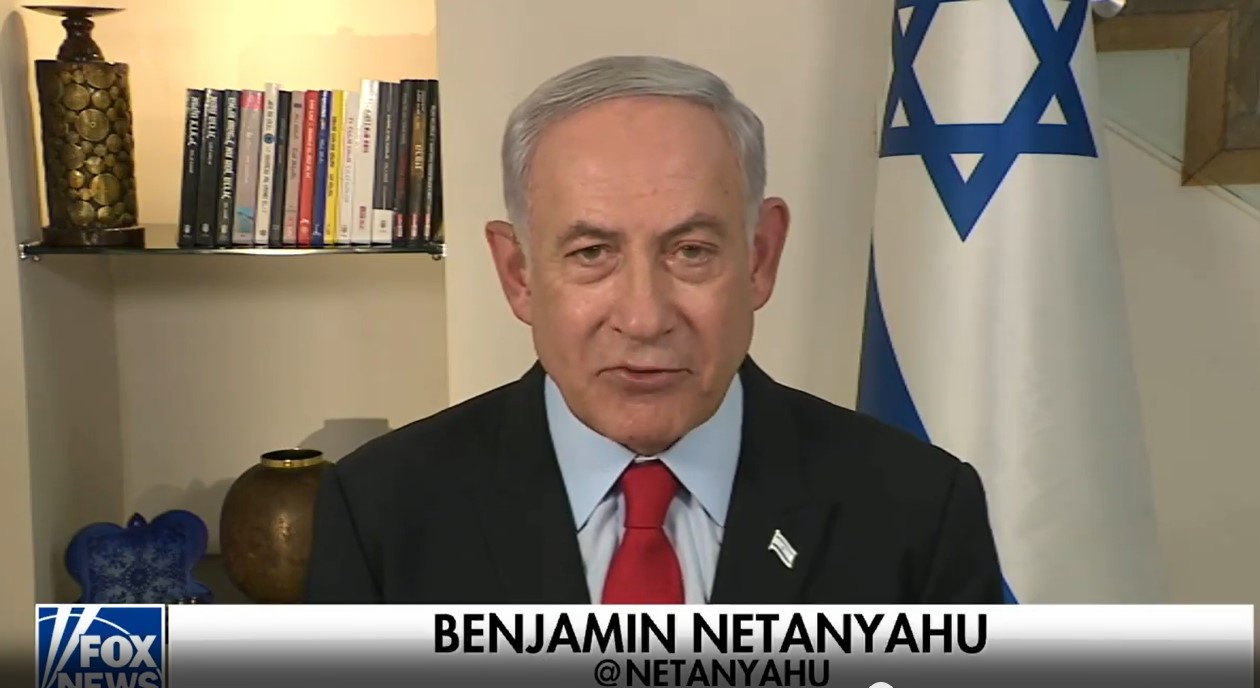
Prime Minister Benjamin Netanyahu speaks to Fox News on July 30, 2023 (Screen capture)

Prime Minister Benjamin Netanyahu speaks to Fox News on July 30, 2023 (Screen capture)

Prime Minister Benjamin Netanyahu dismissed international criticism that his judicial overhaul is undermining democracy and said he will not be swayed by outside pressure.

Speaking to Fox News’s Mark Levin on Sunday, Netanyahu, in an apparent rebuke to the Biden administration and others, said other countries should not interfere with Israel’s internal issues.

Netanyahu said that in his 16 years in power, “I never commented on the internal debates of other democracies,” adding that “everybody has an opinion on Israel; they don’t have an opinion on the riots in France or the protests there, or the debates that happen in other countries.”

Binary Options Fraud – ToI journalist Simona Weinglass’ story

Loaded: 32.07%

Netanyahu said the US was experiencing “a major debate between the Supreme Court and the executive right now and I really don’t care to comment on it.”

The Biden administration has repeatedly expressed its opposition to the overhaul, calling on the government not to advance the legislation without first reaching a broad consensus on the moves.

“We’ll make our own decisions. In democracies, sovereign states, sovereign democracies, the elected representatives of the people make the decisions and that’s how it’s going to be in Israel.”

Last week, lawmakers approved a measure that prevents judges from striking down government and ministerial decisions on the grounds that they are “unreasonable.” The law was approved by all 64 coalition members — with the entire 56-strong opposition boycotting the vote — despite sustained mass protests; vehement opposition from top judicial, security, economic and public figures; repeated warnings from allies, chief among them the US; and thousands of military reservists vowing to quit service.

Nevertheless, Netanyahu said he was still trying to reach an agreement, but blamed the opposition for the failure of talks.

He said three months of negotiations had led nowhere because the “opposition is held hostage by an extreme minority that organizes all these protests and demonstrations.”

“I’m still trying to get a consensus because it is better for democracy that judicial changes are done with as broad a consensus as you can,” he said.

The opposition, however, blames Netanyahu.

Opposition Leader Yair Lapid on Sunday demanded an 18-month freeze on all legislation aimed at overhauling the judiciary as a condition for his Yesh Atid party returning to negotiations with the coalition on judicial reforms.
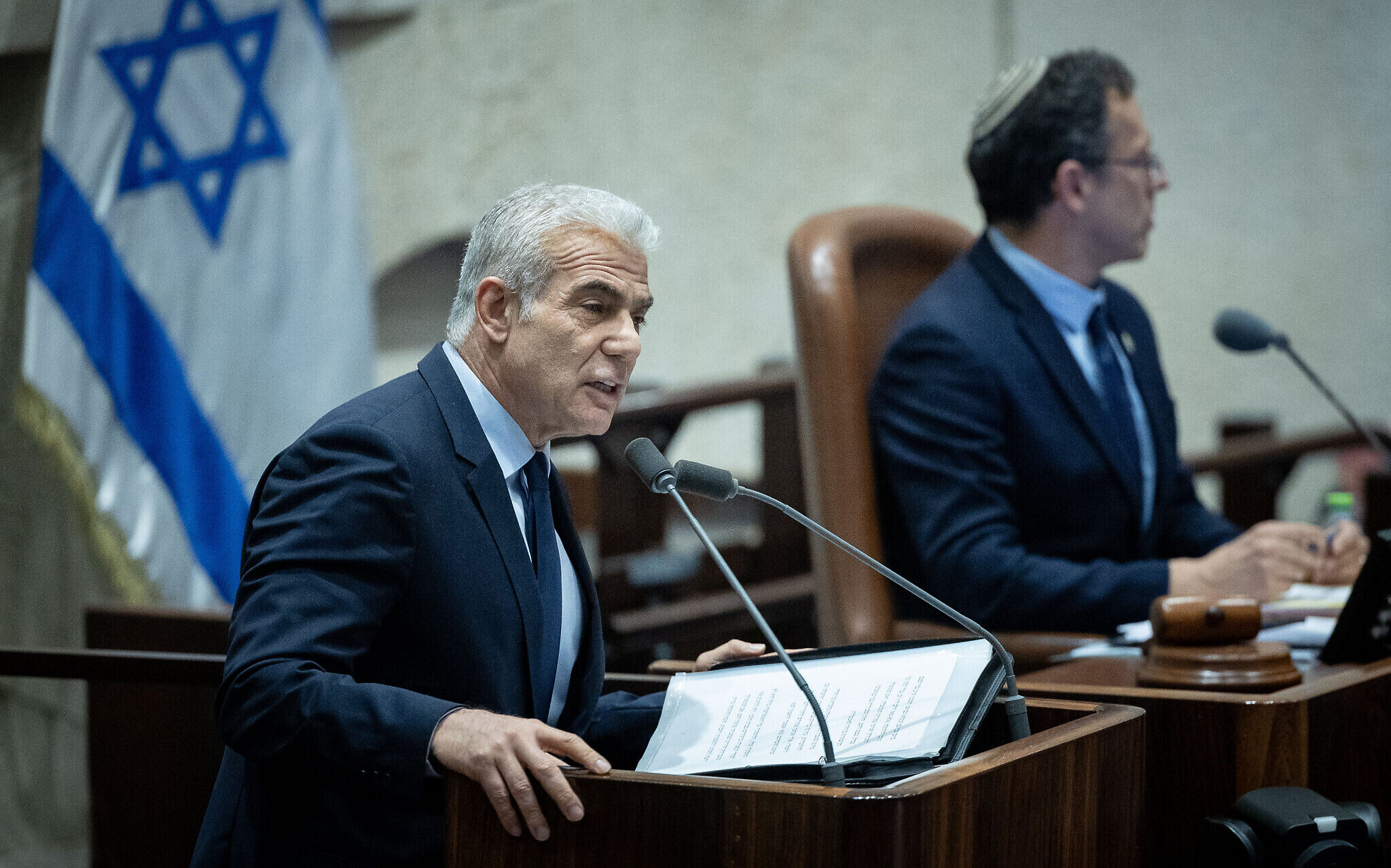
Yesh Atid party head MK Yair Lapid addresses the Knesset plenum. July 30, 2023. (Yonatan Sindel/Flash90)

Lapid, speaking from the Knesset rostrum on the last day before summer recess, said that such a freeze must be cemented into law for his party to trust it.

“As long as there is no legislative freeze, there is no point and no sense to talk about other laws or agreements, because it is quite clear that the government will run away again at the last minute,” Lapid said to the Knesset.

Yesh Atid and fellow opposition party National Unity walked away from floundering compromise talks in June, alleging the coalition had acted in bad faith on a related issue: its efforts to avoid staffing and convening the committee that elects new judges, apparently in a bid to wait until the composition of the panel could be changed in order to give the government more influence.

In his interview with Fox, Netanyahu reiterated his claim that the overhaul would actually strengthen Israeli democracy by restoring a balance of power between branches of government, calling Israel’s Supreme Court “the most activist judicial court on the planet.”

Netanyahu said no other country had a “reasonableness clause,” and moreover the courts still had plenty of ways to act as an effective balance. “This is presented by our opponents as being this awful end to democracy. If that’s the case, you have no democracies anywhere else on Earth.”

Netanyahu again said the actual threat to Israeli democracy came from threats by reservists to stop showing up for duty.

Anti-overhaul activists protest against the government’s judicial overhaul, on the Ayalon Highway in Tel Aviv, on July 29, 2023. (Miriam Alster/Flash90)

“The day that Israel’s elected government succumbs to threats from former generals, that’s the end of democracy and we are not going to let it happen,” he said.

However, Netanyahu rebuffed a statement from host Levin that his opponents were engaged in “treason.”

“It’s not treason, it’s just illegitimate and wrong.”

Netanyahu’s interview with Fox was one of several he has given in recent days to the foreign press while apparently boycotting the mainstream Israeli media.

Netanyahu told Fox that the Israeli press was misrepresenting the overhaul debate.

“It’s not what you read, it’s not what you hear, it’s not what the news media are covering. They are just wrong,” he said.
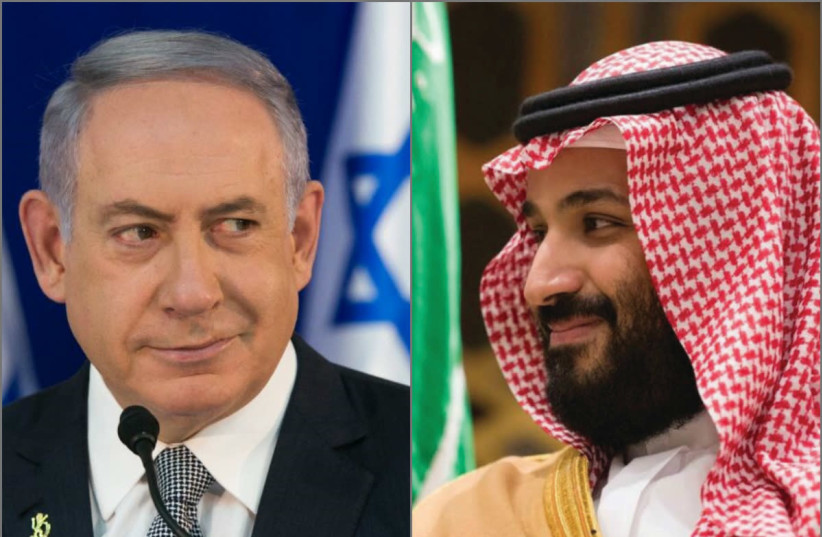
If normalization with Saudi Arabia means putting the controversial judicial reform on the back burner due to political and diplomatic constraints, that may be a price well worth paying.

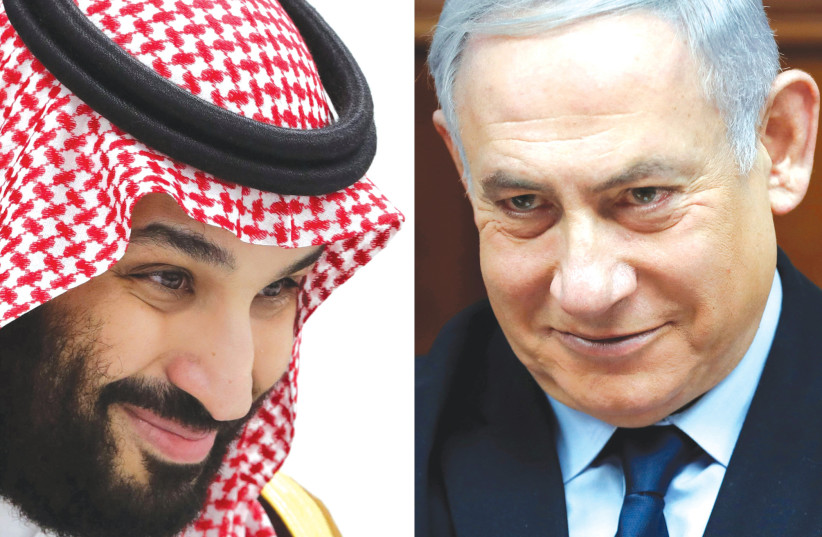
Israeli Prime Minister Benjamin Netanyahu and Saudi Arabian Crown Prince Mohammed Bin Salman (photo credit: MARC ISRAEL SELLEM/REUTERS)
Israeli Prime Minister Benjamin Netanyahu and Saudi Arabian Crown Prince Mohammed Bin Salman
(photo credit: MARC ISRAEL SELLEM/REUTERS)

Although the details are murky, it appears as though the United States is pushing for an agreement with Saudi Arabia that includes normalization of relations with Israel. And while some of the reported conditions of the deal would challenge Prime Minister Benjamin Netanyahu and his current cabinet, the deal itself would be an historic breakthrough in the Middle East and is well worth pursuing.

US President Joe Biden hinted at progress on the deal on Friday, as reported by Reuters. “There’s a rapprochement, maybe, underway,” Biden said tersely, declining to elaborate.

Biden addressed the issue during his visit to Israel and Saudi Arabia last year, and White House officials have reportedly been discussing a major upgrade in security ties with Riyadh, as well as significant Israeli concessions to the Palestinians aimed at keeping alive prospects for a two-state solution to the Israeli-Palestinian conflict.

Indeed, there are signs on the ground of earnest efforts to strike a deal. US National Security Advisor Jake Sullivan, accompanied by White House Middle East czar Brett McGurk and Amos Hochstein, Biden’s senior adviser for energy and infrastructure, traveled to Saudi Arabia last week to meet with Crown Prince Mohammed bin Salman and other top Saudi officials and “discuss bilateral and regional matters, including initiatives to advance a common vision for a more peaceful, secure, prosperous, and stable Middle East region interconnected with the world,” the White House said.

The US is considering the Israeli-Saudi normalization deal

The New York Times reported that Biden had not yet made up his mind on an Israeli-Saudi normalization deal, but he had dispatched Sullivan to discuss the terms. The paper reported that during a previous visit by Sullivan in May, the Saudi Crown Prince had expressed willingness to reach a deal on normalization with Israel, prompting Biden to launch what the paper termed a “full-bore effort.”

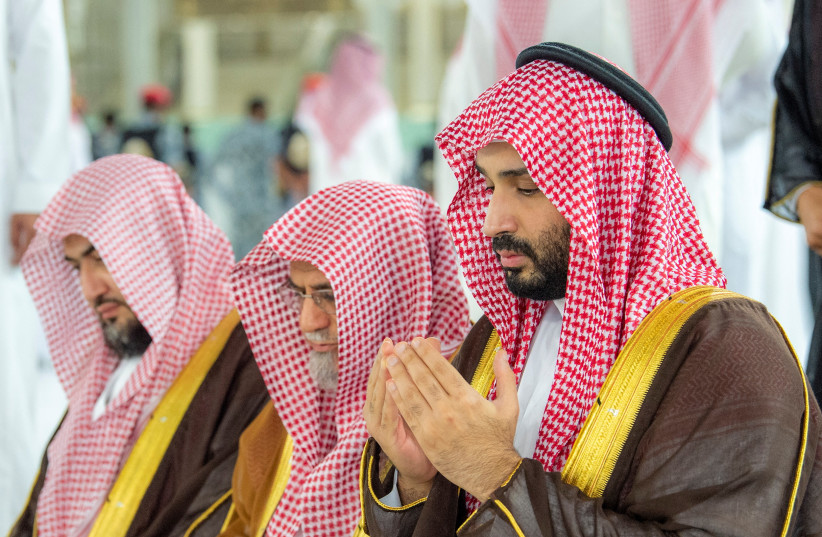
 Saudi Crown Prince Mohammed bin Salman performs morning prayer as he arrives to wash the Holy Kabaa on behalf of Saudi King Salman bin Abdulaziz, in the Grand Mosque in the Holy City of Mecca, Saudi Arabia, August 16 2022.  (credit: BANDAR ALGALOUD/REUTERS)Saudi Crown Prince Mohammed bin Salman performs morning prayer as he arrives to wash the Holy Kabaa on behalf of Saudi King Salman bin Abdulaziz, in the Grand Mosque in the Holy City of Mecca, Saudi Arabia, August 16 2022. (credit: BANDAR ALGALOUD/REUTERS)

According to Times columnist Thomas Friedman, who is considered close to Biden, among the elements involved in a Saudi-Israeli deal are an official Israeli promise not to annex the West Bank; Israeli commitments not to establish any more settlements, expand the boundaries of existing ones, or legalize illegal outposts; and the transfer of some Palestinian-populated territory in Area C of the West Bank to Palestinian Authority control.

According to Friedman, Riyadh is seeking a NATO-like mutual security treaty that would obligate the US to come to its defense if the kingdom is attacked; a civilian nuclear program monitored and backed by the US; and the ability to purchase more advanced weaponry from Washington such as missile defense systems that could be used by the Saudis to counter Iran’s missile arsenal.

In exchange, the US wants the Saudis to offer a large aid package to Palestinian institutions in the West Bank, significantly roll back their growing relationship with China, and help bring an end to the civil war in Yemen, according to Friedman, who stressed that such a deal could take months to negotiate and is still “a long shot, at best.”

On the domestic Israeli front, Friedman speculated that Netanyahu could be forced to abandon the far-right members in his cabinet who would oppose these terms and instead align himself with centrist political forces in the opposition.

Netanyahu, for his part, has come out strongly in favor of normalization with Saudi Arabia, calling it one of the top priorities of his government. In an interview with Sky News in early June, for example, Netanyahu called a Saudi-Israeli deal “a quantum leap forward” that would change history.

Describing Saudi Arabia as the most influential country both in the Arab and Muslim worlds, Netanyahu said, “It would fashion, I think, the possibility of ending the Arab-Israeli conflict. And I think that would also help us solve the Palestinian-Israeli conflict.”

Pursuing a deal with Saudi Arabia would allow the prime minister to focus on his stated policy agenda and his pledge to expand the Abraham Accords, rather than being bogged down by the debate over his government’s contentious judicial reform.

While Israel’s decision makers would need to seriously weigh the implications of any potential concessions, if normalization with Saudi Arabia means putting the controversial judicial reform on the back burner due to political and diplomatic constraints, that may be a price well worth paying.


The project didn’t just give Netanyahu a moment to wax on about national unity, it also provided him a platform by which he could push back at critics who have accused him of destroying the country.

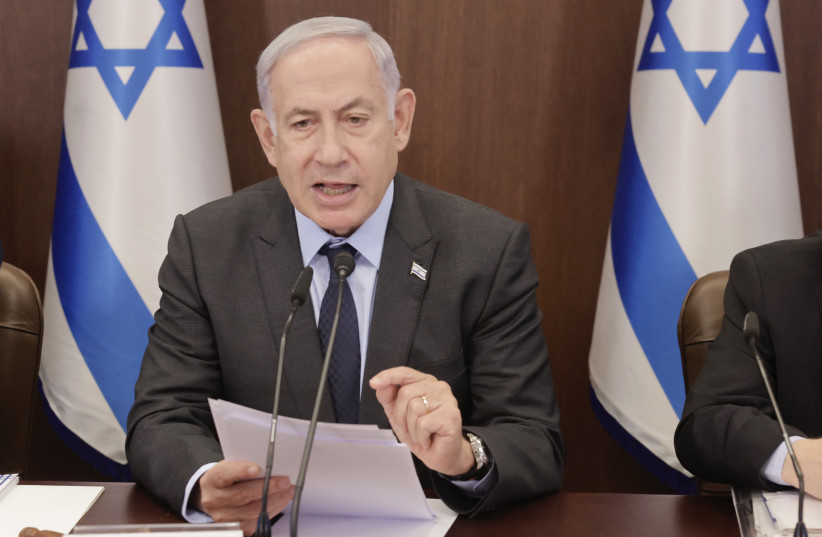
 Netanyahu speaks at the cabinet meeting on July 17, 2023. (photo credit: MARC ISRAEL SETUP)
Netanyahu speaks at the cabinet meeting on July 17, 2023.
(photo credit: MARC ISRAEL SETUP)

Prime Minister Benjamin Netanyahu waved a visionary olive branch of peace with his talk Sunday of a Middle East railway from Jerusalem to Riyadh.

He did so in a region boiling over with heat and seared by ethnic and religious animosities. He offered it to a nation wracked by existential divisions.

It was a vision that had an antidote for everyone, including the government politicians who are battling flagging public support.

For more than 30 weeks, hundreds of thousands of Israelis have taken to the streets to protest Netanyahu’s judicial reform plan, which he says will strengthen Israeli democracy and which his opponents fear will transform Israel into a dictatorship.

The extreme rift has even led to some speculation that the nation is on the cusp of a civil war. The divisions were on sharp display last week with activists lighting protest bonfires on major national arteries, as the Knesset passed the first leg of the judicial overhaul plan.

 THE NEWEST Saudi lobbyist is the prime minister of Israel, says the writer.  (credit: REUTERS)THE NEWEST Saudi lobbyist is the prime minister of Israel, says the writer. (credit: REUTERS)

The revolutionary new railway line

Then at a moment when the nation seemed most divided, Netanyahu, Likud Transportation Minister Miri Regev, and Finance Minister Bezalel Smotrich, who heads the National Religious Party, started the week by talking about uniting the nation through a revolutionary railway line aptly named “One Israel.”

If the government can’t unite the nation’s heart, it can at least bring everyone closer by embarking on a plan to “connect Israel” to “everyone’s future,” a future in which a train can bring Israelis from Kiryat Shmona to Eilat in just two hours.

To put that in perspective, due to frequent and heavy traffic jams, it can take longer than two hours to drive just from Tel Aviv to Jerusalem.

The project, which has environmental and economic bonuses, didn’t just give Netanyahu a moment to wax on about national unity. It also provided him a platform by which he could push back at critics who have accused him of destroying the country to serve his own political interests.

From an optical perspective, only a fully functional government with the public’s best interest at heart could embark on such an ambitious project.

In unveiling the plan, Netanyahu spoke of its revolutionary nature, a turning point in the history of Israeli transpiration, akin to the ones he already led in developing natural gas and transforming the nation into a market economy.

Then he added an additional level, presenting this as a plan not only for domestic salvation, but also as one with the potential for regional transformation.

He linked it to the increasing media and diplomatic chatter about a potential Israeli-Saudi deal, by noting that this would also be the first leg of a regional rail line. Cargo could go from Haifa on the Mediterranean Sea, through Jordan, onward to Saudi Arabia on the Red Sea.

Such a plan first put forward by former transportation minister Israel Katz, now the energy minister, has been under discussion for years.

It would use the promise of using railways to help transform the region into an economic powerhouse, using the lure of propensity to brush away long-standing hatreds and to marginalize the significance of the Israeli-Palestinian conflict.

A ticket from Jerusalem to Riyadh is years away, even in the most optimal circumstances. It was easy for Netanyahu to mention it here, because it gave the impression that Israeli-Saudi normalization was moving forward even at a moment when such a deal still seems highly improbable.

A hefty price for the United States to pay

For an Israeli-Saudi deal to happen, the US has to pay a hefty price or Israel would have to make a major concession to the Palestinians. The less Israel can give the Palestinians, the more the weight for such an agreement falls onto the US.

Regarding such an agreement, The New York Times has reported that the Saudis are demanding a security pact with the US, akin to a NATO-type alliance, as well as Washington support for a civilian nuclear program and sophisticated anti-missile defense systems.

The price tag is so high, that despite bipartisan conceptual support for a deal, it’s unclear whether such an agreement could pass Congress.

Biden is expected to insist in return that Saudi-Arabia normalize ties with Israel.

In doing so, as NY Columnist Thomas Friedman pointed out, the US president would inevitably give a boost to Netanyahu, an Israeli leader Biden has distanced himself from due to his sharp opposition to the prime minister’s judicial overhaul plan.

Biden has little choice here if he is legacy shopping in the Middle East. Former US president Donald Trump touted his ability to make the “Deal of the Century” by finalizing a peace deal between Israel and the Palestinians, only to leave office having failed to do so.

The Biden administration has mostly shelved his peace map, the international community never adopted it, and the Palestinians outright rejected it.

Time, however, has clarified the sustaining power of Trump’s footprint in the peace process through the Abraham Accords, which he brokered. The agreement of four Arab countries to normalize ties with Israel, despite the absence of Israeli-Palestinian peace, breathed life into Netanyahu’s long-held belief that Israel must first forge a relationship with Arab states before finalizing an arrangement with the Palestinians.

Now, it’s the only game in town. If Biden wants a win in the Middle East prior to the 2024 elections, he has to purchase a ticket on the train whose tracks lead to Riyadh, assuming he has congressional backing.

The possibility of a win here, particularly as Iran and China seek to strengthen their ties with Saudi Arabia, far outweighs any concerns about Israeli democracy, particularly when Saudi Arabia falls far behind the Jewish state on that score. It would also give Biden’s re-election campaign a boost, though his tenure in power is not necessarily dependent on it.

Netanyahu, on the other hand, can’t afford to walk away from a Saudi deal, which would for him be one of his crowning achievements and one which he has long sought.

Depending on the demands of such an agreement, however, he also might not be able to finalize the deal. This is particularly true if Netanyahu is asked to meet some of the gestures to the Palestinians laid out in Friedman’s article, such as promising never to apply sovereignty to West Bank settlements.

He can agree to an additional delay, but he would lose his coalition were he to make such a pledge.

The trick here will be to find a gesture to the Palestinians that Netanyahu can meet while keeping his coalition intact, given its many members who dismiss the idea of Palestinian statehood and want to annex all of Area C of the West Bank.

The possibility of a deal, therefore, appears so slim that Channel 11 on Sunday night floated the idea of a two-phased Israeli-Saudi process, in which the two countries would have low-level diplomatic ties without full-fledged normalization.

Or Netanyahu could switch gears. This is particularly true now that he has secured passage of legislation that narrows the court’s ability to tackle governmental corruption by eliminating the reasonableness clause.

Netanyahu could, Friedman speculated, use the possibility of a Saudi deal to swap out the more extreme elements of his coalition with more moderate ones.

Moderate opposition politicians opposed to joining Netanyahu might sing a different tune once an agreement is actually on the table.

It is nice to speculate about how a Saudi peace deal might also put a monkey wrench in Israel’s judicial reform process. But if Netanyahu is lucky, he won’t have to buy a ticket on this train. Washington will purchase one for him, and all he’ll have to do is go along for the ride.