Lebanese youth brandishing Hezbollah flags cross the border fence between Lebanon and Israel, in violation of the 2006 ceasefire agreement between Israel and Lebanon.
Prime Minister Benjamin Netanyahu is meeting with defense leaders on recent threats made by Hezbollah terrorist chief Hassan Nasrallah and Israeli diplomatic efforts towards Beirut.
Defense Minister Yoav Gallant and senior members of the Israel Defense Forces were expected to present the prime minister with intelligence and situation assessments, along with various possible scenarios during Sunday’s security cabinet meeting.
The military chiefs were also expected to tell the prime minister that Nasrallah does not have any interest in a major conflict with the IDF, but rather is simply creating provocations.
Israelis living in the north do not currently face any threat from Lebanon, an IDF spokesperson said last week. Nevertheless Israel has increased military forces in the area.
The Latest Provocation
Lebanese youths this weekend cut through a fence placed by the United Nations Interim Force in Lebanon (UNIFIL) near the border village of Ghajar.
The infiltrators entered an area prohibited to Lebanese since the 2006 Second Lebanon War, according to a report by the Hezbollah-linked Al Manar news outlet.
The violation allegedly came as a form of protest against Israel’s presence in the village, (which lies within Israeli territory) and the closure of the Lebanese road between Wazani and Abbasia.
Israel ‘Unimpressed’ with Nasrallah Threats
Earlier in the day, Netanyahu said during his opening remarks to the weekly government cabinet meeting that his government is “not impressed by Nasrallah’s bunker threats. At the moment of truth, he will find us standing together shoulder to shoulder,” he said. “Nasrallah also knows that it is not worthwhile for him and Lebanon to put us to the test.”
The Hezbollah leader released a stream of venom on Saturday during a speech marking the Shi’ite festival of Ashura, warning the region “will not calm down until the cancerous growth (Israel) is uprooted.”
Nasrallah claimed, “The Palestinian people today believe more than before in the resistance, and they rely on it and [on] the axis of the resistance in the region. They make sacrifices and carry out jihad with knives, explosives, guns and rocks.”
The terror chief, whose efforts are generously supported by Iran, warned Israel to “beware of any stupid act, since the resistance will not cave, or renounce its responsibility to protect or deter, and will be ready for an option and to confront any mistake or stupid act.”
The latter threats were related to the continuing presence of one of two tents erected on Mount Dov (known in Lebanon as Sheba’a Farms), Israeli territory, several months ago by Hezbollah operatives. One tent has since been removed, but the second one remains despite diplomatic efforts by Israel and the United Nations to have it removed.
Israel will use the summer break “to try and reach an agreement,” Netanyahu said in his remarks to the cabinet. “Hopefully this time our outstretched hand will not remain in the air.”
New York Times reports Riyadh’s demands for action on the ground unlikely to be approved by hardline coalition, PM may need to seek centrist government with opposition
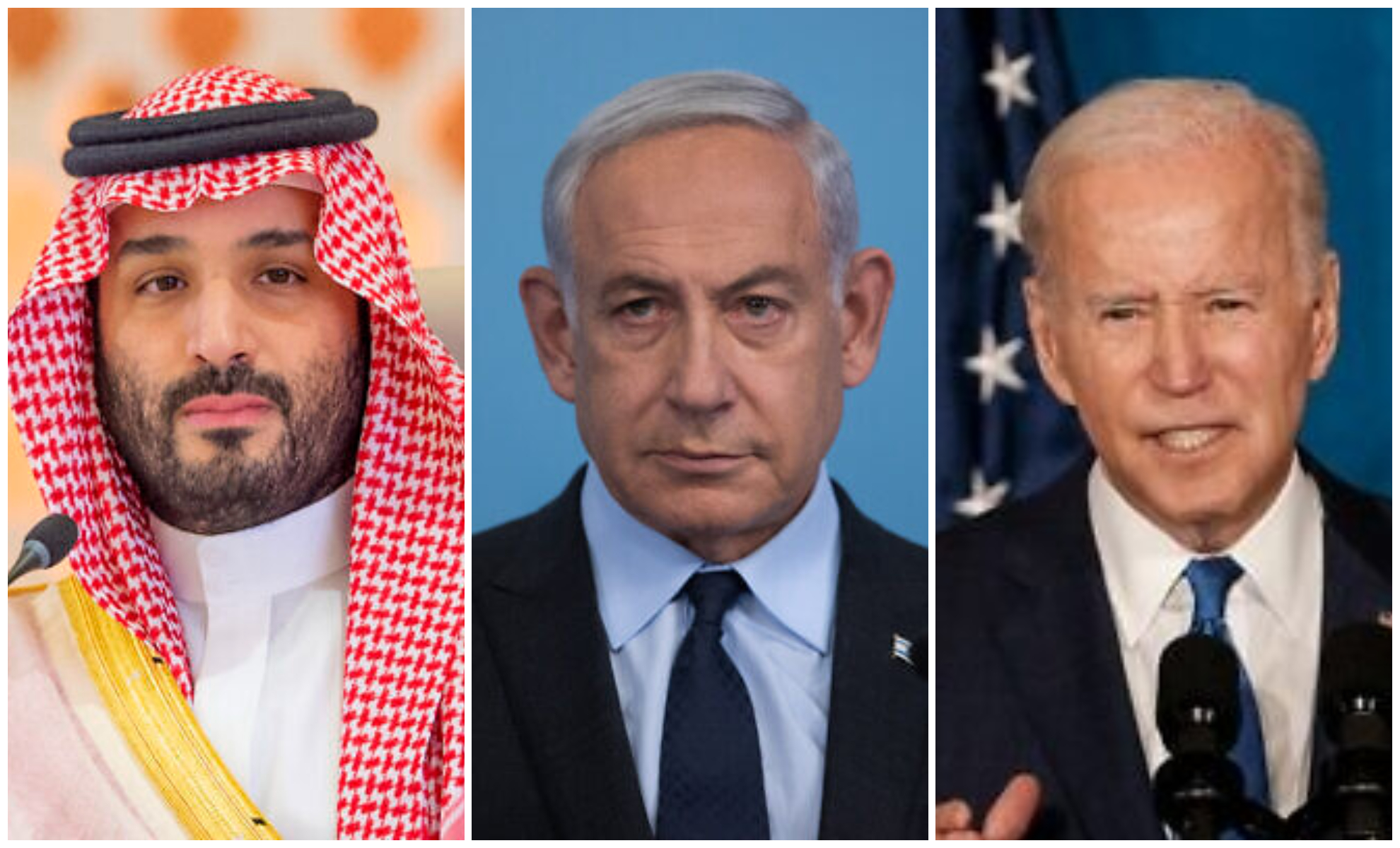
(L) Saudi Crown Prince Mohammed bin Salman in Jeddah, Saudi Arabia, May 19, 2023. (Saudi Press Agency via AP); (C) Prime Minister Benjamin Netanyahu in Jerusalem (Alex Kolomoisky/Pool/Flash90); (L) US President Joe Biden on November 2, 2022 in Washington, DC (Michael A. McCoy / GETTY IMAGES NORTH AMERICA / Getty Images via AFP)
A potential normalization deal between Saudi Arabia and Israel would require “significant concessions” to the Palestinians that are unlikely to be approved by Prime Minister Benjamin Netanyahu’s hardline coalition, and could instead require him to seek the formation of a unity government, The New York Times reported Saturday.
The report said that while Riyadh had in the past had not necessarily demanded “a clear Israeli move toward the Palestinians,” King Salman, who has in general given up significant control to Crown Prince Mohamed Bin Salman, intervened in the discussions on a potential deal to ensure that the caveat was included, an unnamed Israeli official told the newspaper.
According to the report, it is Israel’s understanding that Saudi Arabia would not be satisfied with a promise from Netanyahu that he will not annex the West Bank, but instead would require “significant action on the ground.”
Binary Options Fraud – ToI journalist Simona Weinglass’ story
Loaded: 32.07%
The report noted that such moves were unlikely to be approved by the far-right elements in the Netanyahu government, and that a push in that direction could bring it down.
Opposition leaders have stated that they will not serve in a coalition with Netanyahu due to his ongoing corruption trial, “but questions have come up in discussions with Americans about whether the leaders might relent if it meant establishing diplomatic relations with the Saudis,” the report said.
Other demands from Riyadh have been said to include a mutual defense pact with the US, similar to NATO, whereby if Saudi Arabia were attacked, Washington would be committed to come to its defense. Many US lawmakers and officials are reportedly very uneasy with the prospect of such an agreement.
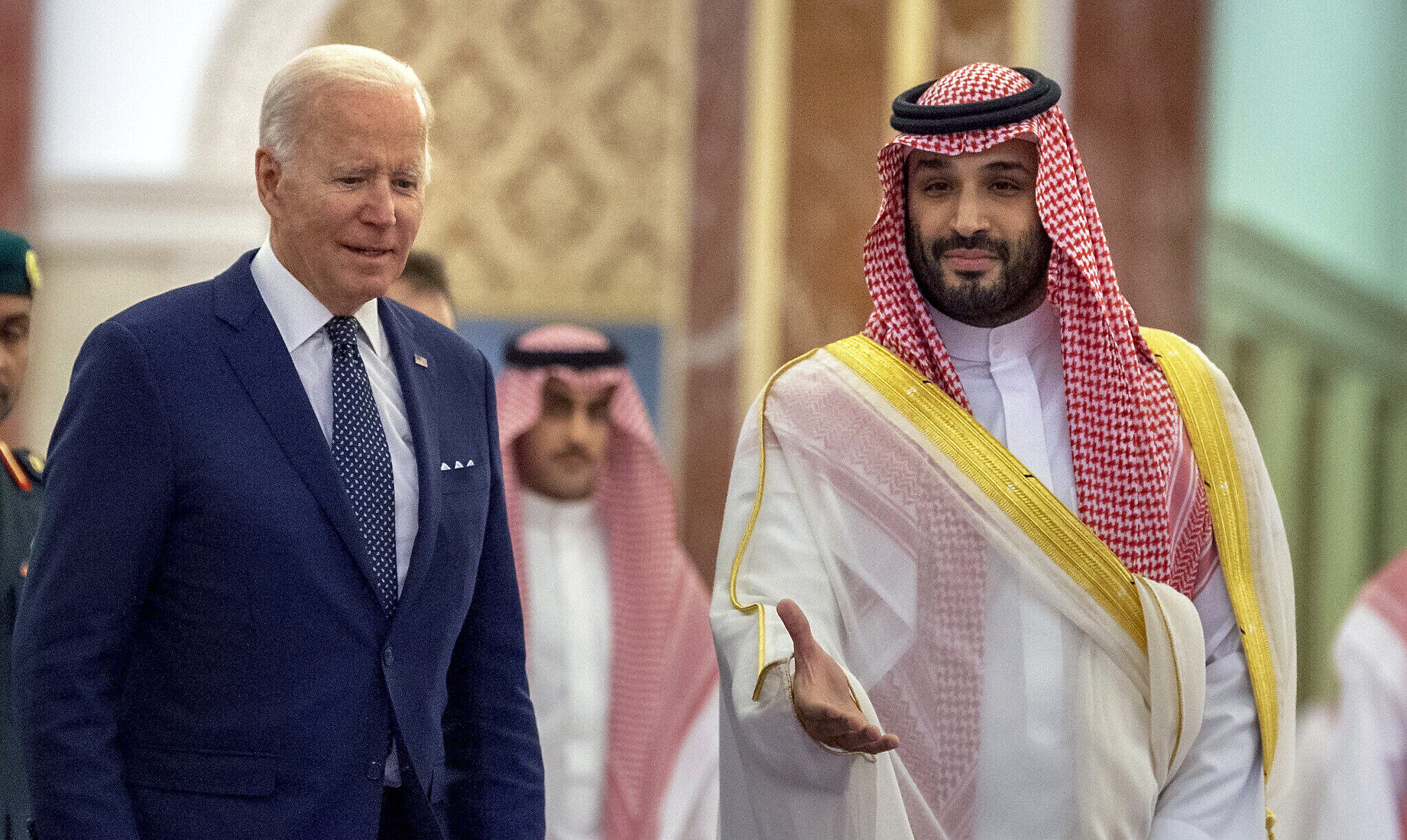
File: In this photo released by the Saudi Royal Palace, Saudi Crown Prince Mohammed bin Salman, right, welcomes US President Joe Biden to Al-Salam Palace in Jeddah, Saudi Arabia, July 15, 2022. (Bandar Aljaloud/Saudi Royal Palace via AP, File)
In addition, Riyadh wants to develop a civilian nuclear program, a demand long-opposed by Washington and Jerusalem.
According to previous reporting in The Times of Israel, Saudi Arabia also wants the ability to purchase more advanced weaponry from Washington such as the Terminal High Altitude Area Defense (THAAD) antiballistic missile defense system, which could be used to combat Iran’s increasing missile arsenal.
In exchange, the US is looking for Riyadh to offer an unprecedentedly large aid package to Palestinian institutions in the West Bank, to significantly roll back its growing relationship with China, and to help bring an end to the civil war in Yemen.
The Times report noted that US National Security Adviser Jake Sullivan has visited Saudi Arabia twice in less than three months, positing that this could be a sign of progress.
It said that US officials who were in Jeddah on Thursday “expressed cautious optimism that progress could be made as diplomats on the ground continue talking.”
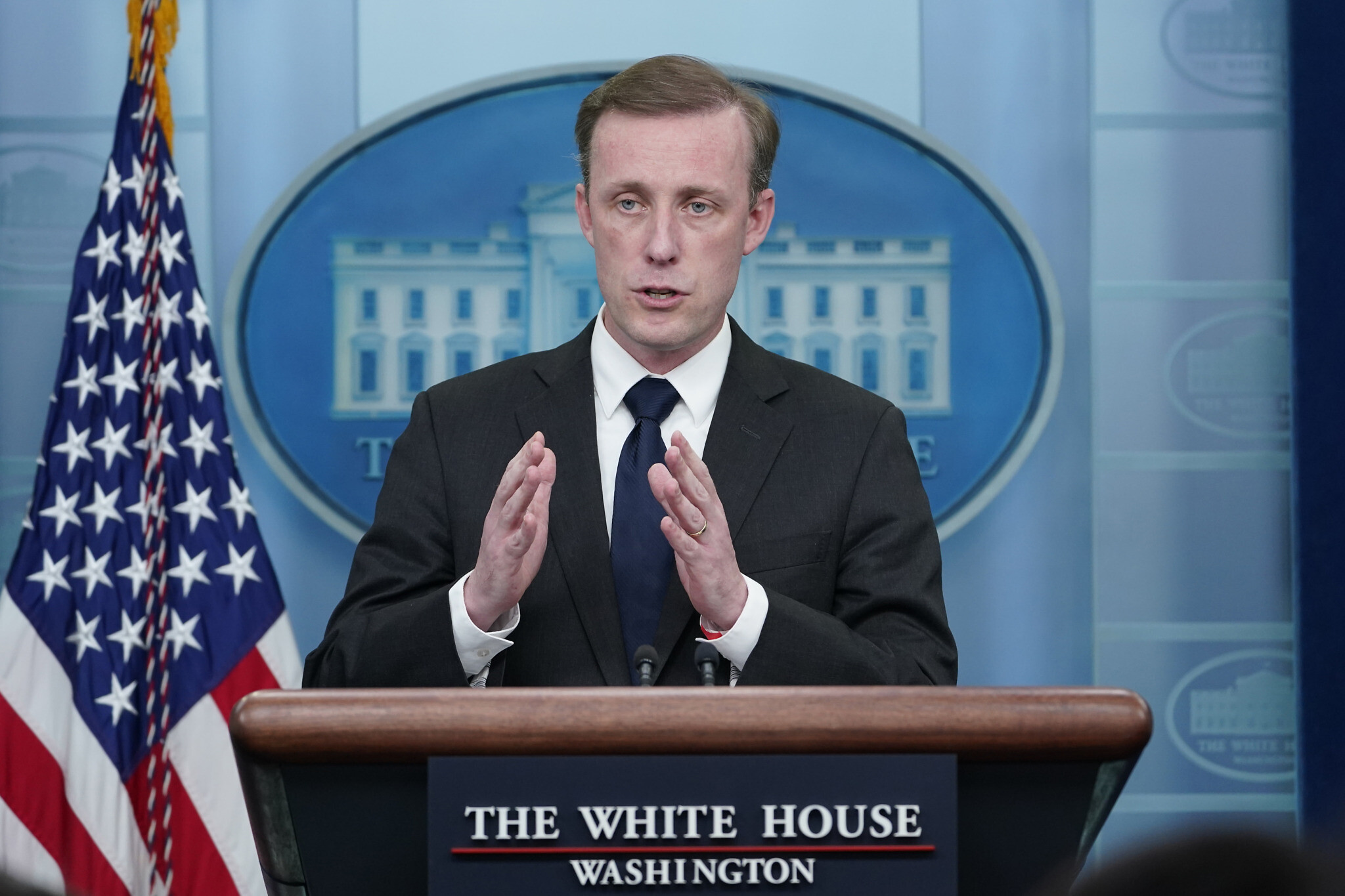
White House national security adviser Jake Sullivan speaks during the daily briefing at the White House in Washington, December 12, 2022. (Susan Walsh/AP)
On Friday, US President Joe Biden hinted at possible progress in a potential normalization deal between Israel and Saudi Arabia.
Speaking to contributors to his 2024 reelection campaign at an event in Maine, Biden said, “There’s a rapprochement maybe under way.” He did not give further details.
The Times reported Saturday that Biden has not yet made up his mind on the desirability of an Israel-Saudi Arabia normalization deal.
The newspaper reported that during a previous visit by Sullivan in May, Saudi Crown Prince bin Salman expressed an increased willingness to reach a deal on normalization with Israel, prompting Biden to launch a “full-bore effort.”
Tom Friedman, known to have a close relationship with Biden, wrote in a New York Times column Thursday that these steps might include an official Israeli promise never to annex the West Bank (as part of the 2020 normalization deal with the United Emirates, Netanyahu agreed to hold off on actualizing his annexation pledge until 2024); a commitment not to establish any more settlements or expand the boundaries of existing ones; a commitment not to legalize any illegal outposts; and the relinquishing of some Palestinian-populated territory in Area C of the West Bank, which is controlled by Israel under the Oslo Accords.
Meanwhile, the Palestinian Authority — which has given a cold shoulder to other recent Arab normalization deals with Israel — would have to endorse this latest one with Saudi Arabia, he wrote.
Friedman stressed that any such deal would likely take months to negotiate and is still “a long shot, at best.”
Palestinian Authority President Mahmoud Abbas (R) and US Secretary of State Antony Blinken shake hands following their meeting in the West Bank city of Ramallah on January 31, 2023. (Ronaldo Schemidt/Pool/AFP)
Biden has said as much himself, telling CNN earlier this month, “We’re a long way from [a Saudi deal]. We got a lot to talk about.”
The US president pledged during the 2020 campaign to make the kingdom a “pariah” over its human rights record and the 2018 murder in Turkey of dissident journalist Jamal Khashoggi, remarks that angered Riyadh.
US relations with the desert kingdom then warmed again in 2022, when Biden visited both Israel and Saudi Arabia on a trip to reportedly secure a number of understandings from Riyadh, including higher oil production to offset gas prices, and to boost the alliance amid changing geopolitical landscapes in the Middle East and Asia.
For his part, Netanyahu has long sought what is seen as an elusive normalization deal with the Saudis, repeatedly describing it as one of the top priorities of his new government and one that could lead to an end to both the Arab-Israeli conflict and the Israeli-Palestinian conflict.
However, US officials have warned in recent months that Israel’s policies in the West Bank and the advancement of its judicial overhaul have made securing a normalization agreement with Saudi Arabia all but impossible, and have strained ties between Jerusalem and Washington.
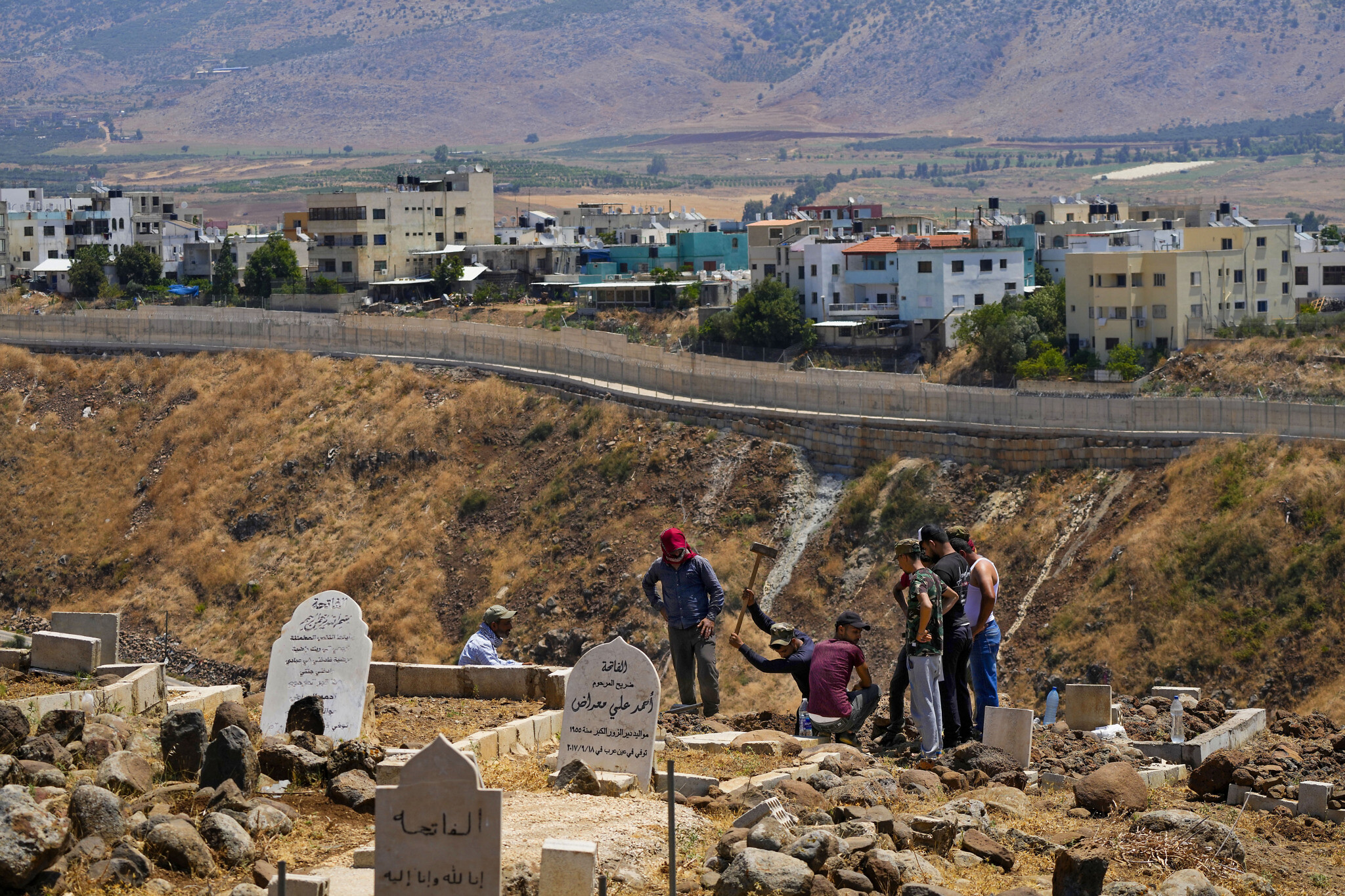
Residents dig a grave at a cemetery on the Lebanese side of the Lebanese-Israeli border in the southern village of Wazzani with the walled northern part of Ghajar village in the background, Lebanon, Tuesday, July 11, 2023. (AP Photo/Hassan Ammar)
Prime Minister Benjamin Netanyahu will hold a meeting with security chiefs tomorrow to discuss the recent uptick in tensions on the northern border with the Lebanese terror group.